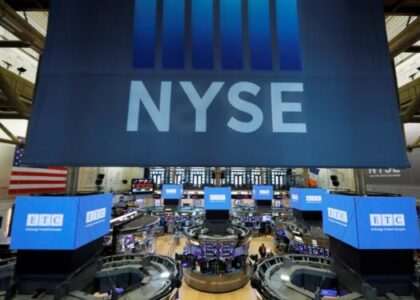
SpaceX IPO Set to Launch Tonight, Trading as SPCX on Nasdaq
A landmark event in U.S. markets is unfolding as Elon Musk’s groundbreaking aerospace company, SpaceX, prepares for its highly anticipated Initial Public Offering (IPO). The company has set its offering price at $135 per share, with trading under the ticker symbol “SPCX” expected to commence tonight (June 12th) at 9:30 PM Taiwan time on the Nasdaq.
This monumental IPO has reportedly raised an astounding $75 billion, solidifying its place as the largest IPO in history. This capital injection is projected to propel SpaceX’s fully diluted market capitalization to an extraordinary $1.75 trillion to $1.8 trillion. Even more remarkably, the event is poised to create an estimated 4,400 new millionaires among current and former SpaceX employees who believed in Musk’s audacious vision.
SpaceX IPO: A Wealth Creation Engine for Thousands of Employees
The immense wealth generated by the SpaceX IPO extends far beyond its executive suite. According to analysis from the investment platform Hill.com, the offering is expected to mint over 4,400 new millionaires. A staggering 400 of these individuals are projected to hold stock assets valued at over $100 million.
Illustrating this widespread prosperity, The New York Times highlighted the story of Trevor Hise, a 37-year-old former launch engineer. Defying his parents’ initial objections, Hise joined SpaceX after graduation. Today, his foresight has paid off handsomely, as he holds over 100,000 shares, valued at an astonishing $13.5 million (approximately NT$430 million) at the IPO price. Hise is now reportedly in a state of semi-retirement.
Similarly, Gavin Petit, who joined as a launch engineer in 2012, made a bold decision early on: converting all his company bonuses into stock. Despite the high risks and frequent rocket launch failures during those nascent years, Petit’s conviction has been vindicated. He has accumulated over 50,000 shares, solidifying his status as a millionaire.
SpaceX’s path to wealth creation stands apart from typical tech IPOs, which are often driven by software and AI algorithms. Its formidable empire is built on tangible assets: sprawling factories, state-of-the-art launchpads, and advanced manufacturing facilities. This necessitates a diverse workforce, where Elon Musk relies not just on software engineers but also on thousands of skilled welders, mechanics, and technicians – many of whom were compensated with company stock.

Fortune magazine further underscored this trend, reporting that Juan Hernandez, a former Mexican-American welder who joined in 2015, holds stock valued at $880,000. Ruchir Shah, CEO of the startup Skillcat, remarked that this phenomenon unequivocally demonstrates the potential for equity compensation in hands-on technical roles, not just in executive or software development positions.
However, Georgetown University associate professor Jason Schloetzer offers a cautionary perspective, noting that such equity compensation is frequently acquired through payroll deductions, effectively transferring a greater degree of financial risk to the employees themselves.
SpaceX IPO: A Deep Dive into Divided Expert Opinions
As this historic IPO unfolds, a critical question emerges for investors: is now the opportune moment to buy in? Business Insider and Reuters have compiled a range of expert opinions, revealing a stark division.
On the bullish side, Wedbush analyst Dan Ives expressed strong optimism, hailing the IPO as a pivotal moment for both the space and AI industries. Ives even speculates an 80% probability that Elon Musk will merge SpaceX with Tesla by 2027, signaling a unified future for his ventures.
Conversely, Jim Cramer, the outspoken CNBC personality often humorously referred to as a “contrarian indicator” by online communities, issued a stern warning. He cautioned that the intense demand surrounding SpaceX’s IPO could inflate its valuation to unsustainable and potentially perilous levels.
Adding to the skepticism, renowned short-seller Jim Chanos bluntly stated that SpaceX’s valuation is “entirely supported by hopes and dreams,” asserting it won’t be worth $1.75 trillion within the next five years. Independent analysis firm Morningstar’s Nicolas Owens went further, suggesting that SpaceX’s fair valuation should be nearly 50% below its IPO price.
- Related Report: Is the SpaceX IPO Worth Buying? Independent Firm Sets $63 Target Price, Significantly Below $135 Offering.
Investment expert Altug Dincturk provided historical context, noting that high-profile stocks frequently underperform in their initial listing phases, with approximately half experiencing negative returns within their first year. Andy VandenBerg, founder of VDB Wealth, echoed this caution, highlighting that the average maximum drawdown in the first year for the 30 most recent large tech IPOs stood at a staggering 55%.
Synthesizing these diverse expert opinions, the key arguments for both bullish and bearish outlooks can be summarized as follows:
- Bullish Arguments: Proponents emphasize SpaceX’s unparalleled and irreplaceable dominance in the aerospace sector, coupled with anticipated mandatory buying from passive funds. They view the IPO as a unique opportunity to invest in the forefront of the next technological revolution.
- Bearish Concerns: Skeptics highlight SpaceX’s exceptionally high revenue-to-valuation ratio, the formidable technical hurdles associated with future endeavors like space data centers, and potential institutional selling pressure post-listing. They argue that the substantial IPO premium has already priced in several years of future growth, leaving little room for upward movement.
This monumental event, bridging the aerospace industry, traditional finance, and even the burgeoning blockchain tokenization market, presents a fascinating dilemma. Will SpaceX emulate Tesla’s remarkable ability to defy short-sellers and conventional market wisdom, carving out an unprecedented trajectory? Or will it follow the path of many historical mega-IPOs, experiencing a prolonged correction once the initial fervor subsides? The answer will ultimately hinge on the delicate balance between global investors’ faith in Elon Musk’s visionary leadership and their pragmatic assessment of inherent risks.
(The above content has been excerpted and reproduced with authorization from our partner CryptoCity. Original article here.)
Disclaimer: This article is intended solely to provide market information. All content and opinions are for reference purposes only and do not constitute investment advice. They do not represent the views or positions of BlockBeats. Investors are advised to make their own decisions and conduct their own transactions. The author and BlockBeats will not assume any responsibility for direct or indirect losses incurred by investors’ transactions.