SpaceX’s Soaring Valuation: Why ‘Big Short’ Icon Michael Burry Hesitated to Short It
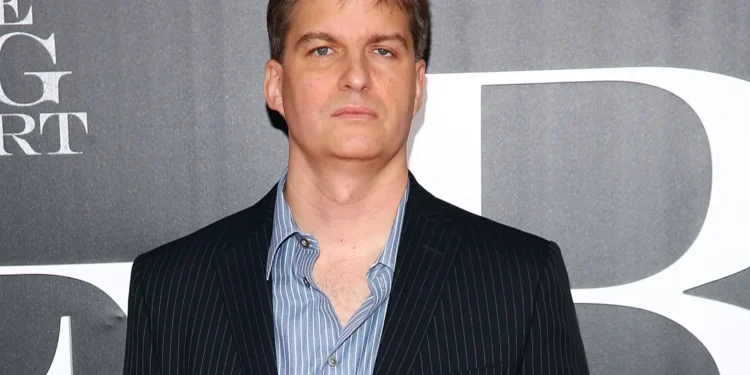
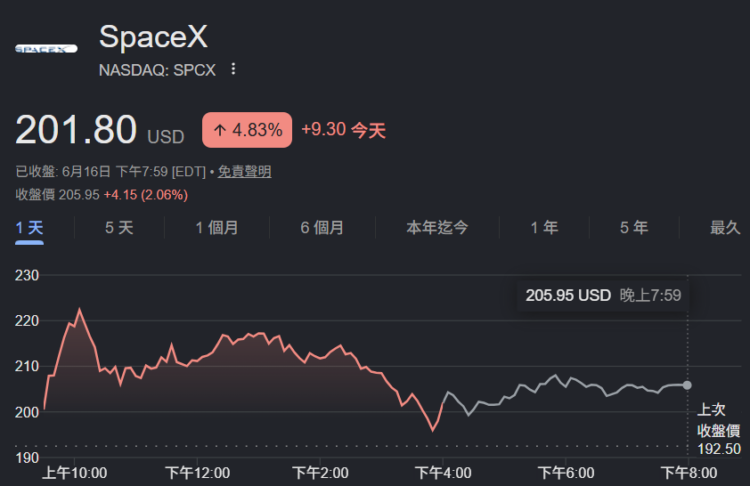
Elon Musk’s SpaceX has rapidly ascended to a staggering $2.66 trillion market capitalization just days after its public listing, solidifying its position as the world’s fifth-largest enterprise. This meteoric rise, however, has ignited a fierce debate among Wall Street’s sharpest minds, particularly drawing the attention of Michael Burry, the legendary investor immortalized in “The Big Short.” While consistently bearish on SpaceX’s valuation, Burry recently revealed a surprising paradox: despite serious consideration, he ultimately couldn’t bring himself to initiate a short position.
Michael Burry’s Reluctant Stance on Shorting SpaceX
In a recent SubStack post, Burry disclosed his in-depth research into various bearish options strategies for SpaceX. This included examining December 2026 put options with a strike price of $100, which were trading at approximately $6.75 at the time. Burry admitted that these shorter-term contracts were highly tempting. However, after careful evaluation, he ultimately decided against establishing any short positions.
Despite his persistent skepticism regarding SpaceX’s ability to justify its immense market capitalization with annual revenues reportedly under $20 billion, Burry found the current pricing of options to short the stock to be prohibitively expensive.
He articulated his current position as a neutral observer, neither shorting nor going long on SpaceX. Burry expressed a hope that the stock price would stabilize in the mid-$250 range, which would subsequently lead to a reduction in the implied volatility of its options.
Burry’s Prior Skepticism: A Trillion-Dollar Doubt
Burry’s reservations about SpaceX’s valuation are not new. In early June, prior to the company’s listing, he took to social media to assert that SpaceX’s value was far from supporting even a $1 trillion valuation, let alone $2 trillion.
His analysis, based on SpaceX’s previously filed IPO prospectus, highlighted a critical point: while the company projected $18.7 billion in revenue for 2025, it also anticipated a net loss of $4.9 billion due to substantial expenditures on AI. This scenario of a loss-making IPO, Burry argued, suggested that the high valuation was primarily driven by market euphoria rather than robust fundamental analysis.
- Related Report: SpaceX Gears Up for Epic IPO! Musk Retains 85% Voting Control, Loss-Making Listing Raises Eyebrows
Wall Street’s Veteran Short-Sellers Echo Concerns
Other prominent figures in the world of short-selling have voiced similar anxieties. Reuters previously reported that Jim Chanos, founder of the renowned short-selling firm Kynikos Associates, bluntly stated that the fervor surrounding SpaceX’s Initial Public Offering (IPO) was built entirely on “dreams and hopes,” deeming its $1.75 trillion valuation utterly unrealistic.
Chanos’s analysis pointed out a significant overvaluation, noting that SpaceX’s valuation had reached 90 times its revenue, a stark contrast to fellow Musk-led company Tesla, which trades at a multiple of just 14 times revenue.
Steve Eisman, another seasoned investor whose story was also featured in “The Big Short,” issued a similar warning. He highlighted that SpaceX’s capital expenditure had surged to an astounding 215% of its revenue in the first quarter. Eisman argued that the company’s future growth was excessively reliant on the high-cost race for AI infrastructure, making its current valuation appear “stupid.”
The Bulls Emerge: High Trading Volume and Strategic Investments
Despite the chorus of bearish sentiment, the market also features strong bullish voices.
According to a CNBC report, Tom Sosnoff, widely known as the “Options Guru,” observed an extraordinary start to SpaceX options trading. Within the first 30 minutes of trading, volume surpassed 300,000 contracts, attracting over $400 million in premiums.
Sosnoff predicted that once high-frequency trading firms reach a consensus on volatility and liquidity stabilizes, SpaceX’s options trading volume could very likely eclipse that of market giants like Tesla and Nvidia, establishing it as one of the most actively traded stocks in the U.S. market.
Taiwanese financial heavyweights are also actively participating in this investment wave. As reported by Economic Daily News, Fubon Financial Holdings Chairman Daniel Tsai Ming-hsing confirmed at a shareholders’ meeting that Fubon Life, its subsidiary, successfully participated in SpaceX’s IPO subscription. Fubon Life ultimately secured 50,000 common shares at a price of $135 per share, totaling approximately $6.75 million USD, or about NT$200 million.
Chairman Tsai expressed strong optimism regarding Elon Musk’s long-term vision of extending AI computing power to space and the moon, a strategy he believes will significantly reduce terrestrial energy and cooling costs. Furthermore, Tsai highlighted SpaceX’s nearly decade-long lead in reusable rocket technology, positioning it as a highly exclusive and unique investment opportunity in the market.
(The content above is an authorized excerpt and reproduction from our partner, CryptoCity.)
Disclaimer: This article is provided for market information purposes only. All content and views are for reference only and do not constitute investment advice. They do not represent the views and positions of the author or BlockTempo. Investors should make their own decisions and transactions. The author and BlockTempo will not bear any responsibility for direct or indirect losses incurred by investors’ transactions.