By: Nancy, PANews
Alex Atallah’s AI Triumph: OpenRouter Poised for Multi-Billion Dollar Acquisition by Stripe
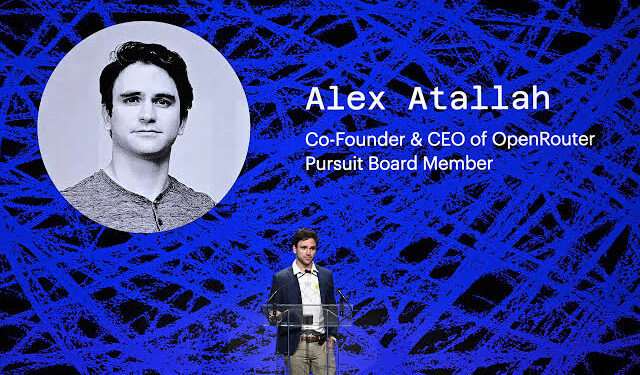
Four years ago, Alex Atallah strategically exited the NFT scene just before its peak. Today, he finds himself once again at the forefront of a technological revolution, this time with artificial intelligence. His latest venture, OpenRouter, an innovative AI model aggregation platform, is reportedly on the verge of a high-profile, multi-billion dollar sale.
On July 23rd, the Wall Street Journal reported that payment processing giant Stripe is in advanced discussions to acquire OpenRouter, with a potential deal valuation approaching an staggering $10 billion. Should this acquisition materialize, it would mark Alex Atallah’s second successful endeavor in building a multi-billion dollar company, following his foundational role at the NFT platform, OpenSea.
Stripe Eyes OpenRouter in Potential $10 Billion AI Infrastructure Play
Rumors surrounding OpenRouter’s potential sale have been circulating for weeks, drawing significant attention from the tech world. Last week, reports from outlets like The Information and Jawl indicated that OpenRouter had received acquisition interest from several major technology companies, with discussions underway for a multi-billion dollar transaction.

The latest update from the Wall Street Journal confirms that Stripe is actively considering the acquisition of OpenRouter, which has established itself as the world’s largest AI model aggregation platform. Sources familiar with the matter suggest that an announcement regarding the deal negotiations could be imminent. However, the situation remains fluid, with possibilities of talks breaking down or other potential bidders entering the fray.
Intriguingly, Alex Atallah himself once described OpenRouter as “the Stripe of AI.” He envisioned OpenRouter serving as a unified gateway for businesses to access diverse AI models, much like Stripe provides a single entry point for various payment processing needs. This approach significantly reduces the overhead for companies switching between multiple AI providers and mitigates the risk of vendor lock-in with a single model supplier.
The synergy between OpenRouter and Stripe is not new; the two companies have a pre-existing partnership. This potential acquisition is seen as a strategic move by the payment infrastructure giant to expand its footprint deeper into the burgeoning AI infrastructure sector. Notably, this comes on the heels of other significant acquisition rumors involving Stripe, including recent market whispers about a potential bid for PayPal.
A Valuation Leap: From Unicorn to Decacorn Status
While specific financial details of the potential transaction remain undisclosed, insiders suggest that if the deal concludes, OpenRouter’s valuation could soar to nearly $10 billion. This figure would represent a monumental increase from its previous funding rounds, underscoring the rapid growth of this AI infrastructure company, which has flourished amidst the large language model boom in just over three years.
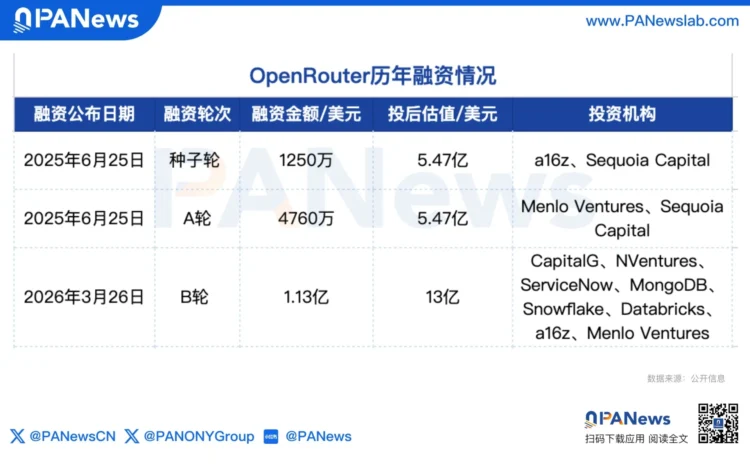
Public records show OpenRouter has successfully completed three funding rounds, raising a cumulative total of over $150 million. In June 2025, OpenRouter announced its $40 million Seed and Series A rounds, valuing the company at approximately $547 million post-money. By March 26, 2026, it secured a $113 million Series B round, pushing its post-money valuation to around $1.3 billion.
Should the reported acquisition go through, OpenRouter’s valuation would experience nearly a tenfold increase in a matter of months, propelling it into the exclusive club of decacorn startups (companies valued at $10 billion or more). This surge in OpenRouter’s market worth is not merely a reflection of the explosive demand driven by large model expansion but also highlights the increasing investor confidence and capital flow into the AI infrastructure sector.
A Repeat Performance? Why OpenRouter Opts for Acquisition Over IPO
This isn’t Alex Atallah’s first rodeo in building a multi-billion dollar enterprise. Before OpenRouter, the serial entrepreneur co-founded OpenSea, instrumental in propelling NFTs from a niche interest to mainstream prominence. During the NFT market’s most fervent period, OpenSea transformed from a little-known platform into the world’s largest NFT marketplace, boasting a valuation that peaked over $13 billion, with its co-founders’ net worth temporarily reaching approximately $2.2 billion.
However, Alex Atallah chose to depart OpenSea well before the broader NFT market experienced a significant downturn in 2022. In the aftermath, as the industry bubble deflated, OpenSea’s valuation plummeted, and its former glory faded. Atallah’s timely exit was widely interpreted by the market as a key indicator of the approaching peak.
Following his departure from the NFT space, Atallah shifted his focus to AI infrastructure, founding OpenRouter, which has since become a pivotal hub in the AI era.
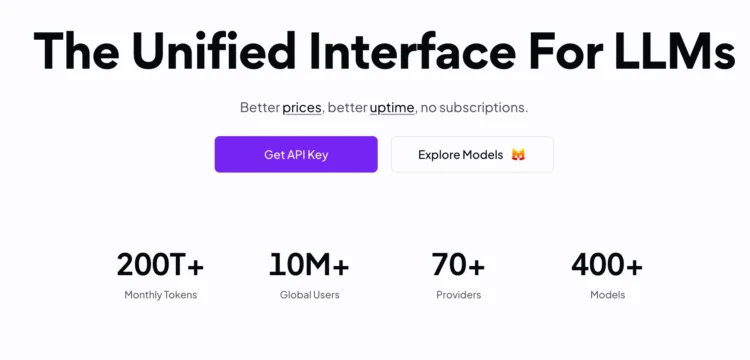
Currently, OpenRouter integrates over 400 AI models, serves approximately 10 million users, and processes more than 200 trillion tokens monthly. The volume of tokens handled via its API has surged tenfold this year alone, showcasing remarkable operational growth.
The Strategic Rationale: A “Pass-Through” Business with Unique Value
Despite its rapid expansion, OpenRouter has seemingly opted for a potential acquisition rather than pursuing an Initial Public Offering (IPO). The underlying reason lies in the nature of its business: it’s a high-volume, “pass-through” operation with inherently limited profit margins.
OpenRouter primarily generates revenue by charging a platform service fee of about 5%-5.5% when developers utilize AI models through its platform. While its annualized AI inference consumption has reached hundreds of millions of dollars, the company’s annualized revenue stood at approximately $50 million as of April 2026.
In essence, OpenRouter connects a vast market of AI demand but does not fully control the upstream value chain. As model capabilities become more standardized, the platform faces continuous pressure on its profit margins from factors such as the rise of open-source models, cloud vendor ecosystem lock-ins, and direct price reductions from model providers. Consequently, OpenRouter might struggle to present a compelling narrative of exponential growth and super-high profitability to the capital markets, which are typically expected from IPO candidates.
Moreover, competition in the AI model aggregation sector is intensifying. Internationally, Meta’s internal AI incubator is reportedly developing a scheduling service to rival OpenRouter, aimed at reducing code development computing costs. Domestically, similar large model aggregation platforms are emerging, including Cheetah Mobile’s EasyRouter and NetEase Youdao’s ThinkFlow.
Therefore, the high valuation currently attributed to OpenRouter by the market largely prices in its future potential and strategic positioning rather than its immediate profitability.
The True Asset: Real-World AI Usage Data
For potential acquirers like Stripe, OpenRouter’s most attractive asset may not be its current revenue scale but rather the immense volume of real-world AI usage data it has accumulated over time. By connecting hundreds of models with tens of millions of users, OpenRouter has amassed a treasure trove of call data from actual production environments. This includes critical insights into performance differences between various models in real tasks, developer preferences, price sensitivity, and substitution patterns between open-source and closed-source models.
Unlike laboratory test data, this real-world AI usage data is far more reflective of market demand and incredibly difficult to replicate through short-term investment. This unique data asset is likely a significant reason why major tech companies are willing to pay a substantial premium for OpenRouter.
From NFTs to AI, Alex Atallah has twice successfully capitalized on major technological shifts. If OpenRouter is indeed sold for a $10 billion valuation, will it signify a re-evaluation of AI infrastructure’s true worth, or is it another signal of an impending market peak? Only time will provide the definitive answer.
(The above content is an excerpt and reproduction authorized by our partner PANews. Original Article Link)
Disclaimer: This article provides market information only. All content and views are for reference only and do not constitute investment advice. They do not represent the views or positions of BlockBeats. Investors should make their own decisions and trades. The author and BlockBeats will not bear any responsibility for direct or indirect losses incurred by investors’ transactions.