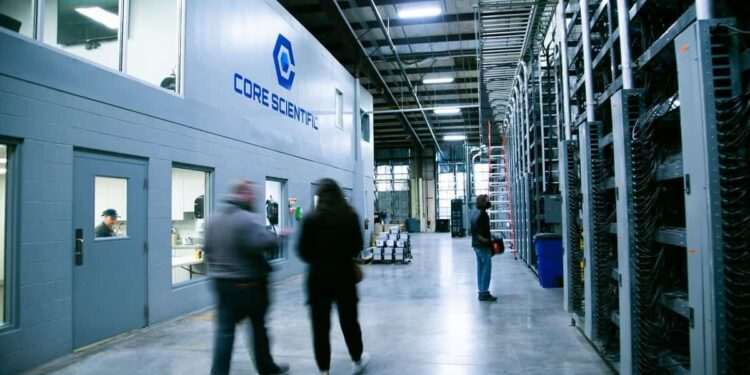
Core Scientific Forges Landmark AMD Partnership, Pivoting from Bitcoin Mining to AI Data Center Powerhouse
In a strategic move signaling a profound shift in the digital infrastructure landscape, U.S.-listed cryptocurrency mining giant Core Scientific (CORZ) has forged a monumental partnership with semiconductor powerhouse AMD (AMD). This collaboration marks Core Scientific’s definitive pivot from its origins as a Bitcoin miner to a key provider of high-density infrastructure for Artificial Intelligence (AI) and high-performance computing (HPC).
Under the terms of the agreement, AMD will gain access to an impressive 2.5 gigawatts (GW) of Core Scientific’s data center capacity, dedicated to supporting its end customers in deploying cutting-edge AI solutions. The initial phase of this long-term alliance is set to commence in 2027, with the delivery of 500 megawatts (MW) of capacity.
Crucially, the partnership includes a 15-year foundational contract spanning five Core Scientific sites, totaling 530 MW, projected to generate over $14 billion in revenue for Core Scientific. This landmark deal is a testament to the company’s remarkable turnaround, having navigated a bankruptcy crisis in 2022 and subsequently announcing plans to liquidate its Bitcoin holdings earlier this year. Its transformation into a leading AI compute infrastructure provider is now officially cemented.
Strategic Depth and Market Dynamics
The collaboration extends beyond mere capacity, encompassing deep cooperation on data center physical architecture design and the deployment of AMD Instinct GPUs, EPYC CPUs, and ROCm software. To solidify this strategic alliance, AMD will also receive warrants to subscribe for Core Scientific common stock at market price, aligning their long-term interests.
Core Scientific, with facilities strategically located across seven U.S. states including Alabama and Texas, has been aggressively reorienting its operations toward AI and High-Performance Computing (HPC). This shift is already yielding significant results; based on the 437 MW of capacity that began billing in mid-July, the company’s annualized revenue is estimated at an impressive $635 million.
Mathew Hein, AMD’s Chief Strategy Officer, underscored the necessity of scalable facilities with stable power supplies for accelerating AI deployments. Echoing this sentiment, Adam Sullivan, CEO of Core Scientific, highlighted the company’s unparalleled capability to deliver large-scale, high-density infrastructure, perfectly complementing AMD’s ambitious technological roadmap.
Mixed Market Reaction
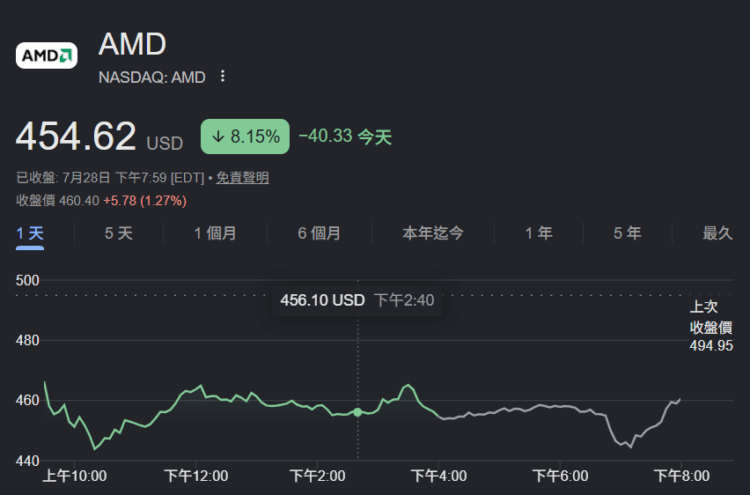
Despite the strategic significance of the announcement, market reactions were bifurcated. Core Scientific’s stock saw a pre-market surge of approximately 6%. However, AMD’s shares experienced a pre-market dip of about 4%, closing the day down 8%. Market analysts attribute AMD’s decline primarily to broader weakness within the semiconductor sector, indicating investor concerns over substantial AI-related expenditures and prevailing uncertainties regarding chip valuations, even amidst positive individual company news.
The New AI Gold Rush: Chipmakers Secure Power and Land
The strategic alliance between Core Scientific and AMD underscores a critical emerging trend in the rapidly expanding AI sector. As cloud service providers aggressively build out data centers, essential resources like reliable power supply and suitable land have become increasingly scarce and valuable.
This trend is not isolated. NVIDIA, another semiconductor titan, established its AI Factory Research Center in Virginia, USA, in late October last year. This initiative is poised to integrate the Vera Rubin platform and form the bedrock of the Omniverse DSX blueprint, designed to support multi-generational, gigawatt-scale data center deployments.
NVIDIA is also strategically expanding its U.S. AI infrastructure footprint through collaborations with leading system manufacturers like Cisco, Dell Technologies, HPE, and Supermicro, alongside cloud and compute operators such as CoreWeave, Lambda, Together AI, and xAI. The long-term pact between Core Scientific and AMD serves as further compelling evidence: chip manufacturers are now directly partnering with data center operators to secure vital AI compute capacity, a clear indication of the latest major shift in the global AI supply chain.