High-Stakes Oval Office Meeting: Trump Rallies Support for CLARITY Act Amidst Regulatory Push
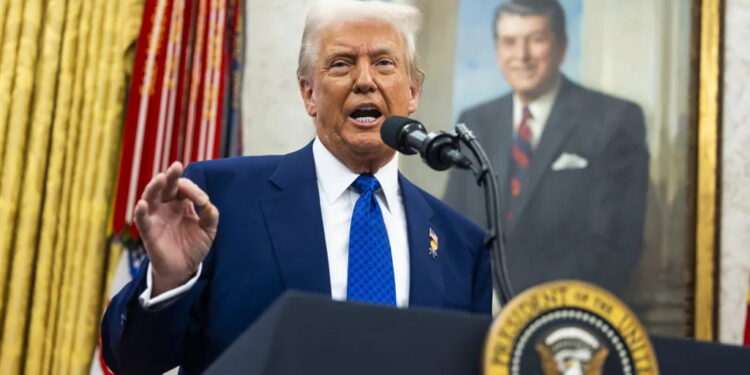
In a significant move signalling an accelerated push for comprehensive cryptocurrency regulation, President Trump convened a closed-door meeting with a select group of leading executives from both the burgeoning crypto sector and established traditional financial institutions. Held in the iconic White House Oval Office on Wednesday, sources indicate the President expressed considerable optimism regarding the prospective CLARITY Act, with the administration reportedly aiming for its passage through Congress as early as next month.
The exclusive Oval Office gathering followed a broader press conference where President Trump addressed tech industry leaders and federal regulatory heads. During the public remarks, he highlighted ongoing efforts by regulators to explore the legal entry of platforms like Hyperliquid into the U.S. market, while simultaneously urging Congress to enact a “fair version” of the CLARITY Act.
Who Was There? A Glimpse at the Influential Attendees
While a complete list of attendees for the private Oval Office discussion remains undisclosed, the earlier press conference saw the presence of several prominent figures. These included:
- Adena Friedman, CEO of Nasdaq
- Vlad Tenev, CEO of Robinhood
- Arjun Sethi, CEO of Kraken
- Jeffrey Sprecher, CEO of ICE (Intercontinental Exchange)
- Brian Armstrong, CEO of Coinbase
- Brad Garlinghouse, CEO of Ripple
Insiders close to the discussions revealed President Trump’s firm conviction in advancing the CLARITY Act legislation. Sergey Nazarov, co-founder of Chainlink, characterized the meeting as “fruitful,” emphasizing that discussions primarily revolved around the CLARITY Act. President Trump’s objective was reportedly to solicit direct industry feedback on the bill’s outstanding issues.
The CLARITY Act: A Rocky Path Towards Landmark Regulation
A Pivotal Vote on September 15th
For over a year, the U.S. Senate has been actively championing the CLARITY Act. Should it ultimately pass, this legislation would mark a historic milestone, establishing the nation’s first comprehensive federal-level regulatory framework specifically tailored for the cryptocurrency industry.
The Senate is currently poised to conduct a crucial first-stage procedural vote on the bill on September 15th, a date eagerly anticipated by stakeholders across the financial landscape.
However, the journey of the CLARITY Act has been far from smooth, encountering numerous hurdles. Key points of contention include intense lobbying from traditional banking sectors versus crypto firms over “stablecoin yield” mechanisms, alongside persistent concerns regarding anti-money laundering (AML) protocols. Perhaps the most significant obstacle, however, has been the escalating scrutiny surrounding President Trump’s personal “cryptocurrency wealth.” The soaring valuations of Trump family-backed decentralized finance (DeFi) projects, such as World Liberty Financial, and the meme coin TRUMP—which have reportedly reached hundreds of millions of dollars—have ignited widespread political debate over potential conflicts of interest.
Addressing Ethical Concerns: A Bipartisan Effort
To mitigate these controversies, President Trump had previously agreed in July to an ethics clause. This provision aimed to prohibit public officials and their spouses from issuing or promoting digital assets. Initially slated for enforcement by the Department of Justice and set to expire in 2029, the clause faced criticism from Democrats for its perceived “weak regulatory power.” Consequently, President Trump is now carefully evaluating a new, bipartisan Senate proposal that seeks to empower state attorneys general to intervene in enforcement, potentially offering a more robust oversight mechanism.
Sergey Nazarov clarified that the Oval Office discussions intentionally steered clear of ethics-related debates. Instead, the entire focus remained on strategizing how to overcome remaining obstacles and ensure the bill’s successful passage. “We discussed what unresolved contentious points remain? Which senators need to be won over? And strategic planning after the congressional recess ends,” Nazarov elaborated.
Beyond Regulation: The Bitcoin Strategic Reserve
Nazarov further disclosed that the meeting also touched upon the concept of a U.S. Bitcoin strategic reserve. While specific details are still being finalized, the idea of establishing such a reserve originated early in President Trump’s term. The proposal envisions utilizing Bitcoin acquired by the U.S. government through criminal or civil confiscation as the primary source for this strategic reserve, potentially bolstering national digital asset holdings.
Industry Leaders Express Optimism
Post-meeting sentiments were overwhelmingly positive. Ji Kim, CEO of the Crypto Council for Innovation, conveyed strong optimism, emphasizing the “substantial and tireless efforts” being made by all parties to advance the bill. Similarly, Ripple CEO Brad Garlinghouse took to social platform X (formerly Twitter) to share his enthusiasm, stating: “The President’s commitment to leading U.S. digital asset innovation is commendable, and the future of this industry is bright.”
Disclaimer: This article is provided for market information purposes only. All content and views are for reference only and do not constitute investment advice. It does not represent the views and positions of BlockTempo. Investors should make their own decisions and transactions. The author and BlockTempo will not bear any responsibility for direct or indirect losses resulting from investor transactions.