Bitcoin’s ‘Death’ Searches Hit All-Time High: A Harbinger of Doom or a Bullish Omen?
The sentiment surrounding Bitcoin has reached a fever pitch of negativity, with Google Trends data revealing an unprecedented surge in searches for “Bitcoin is dead.” In February 2026, these searches peaked at a score of 100, an all-time high that remarkably matches the intensity witnessed during the infamous FTX collapse of 2022.
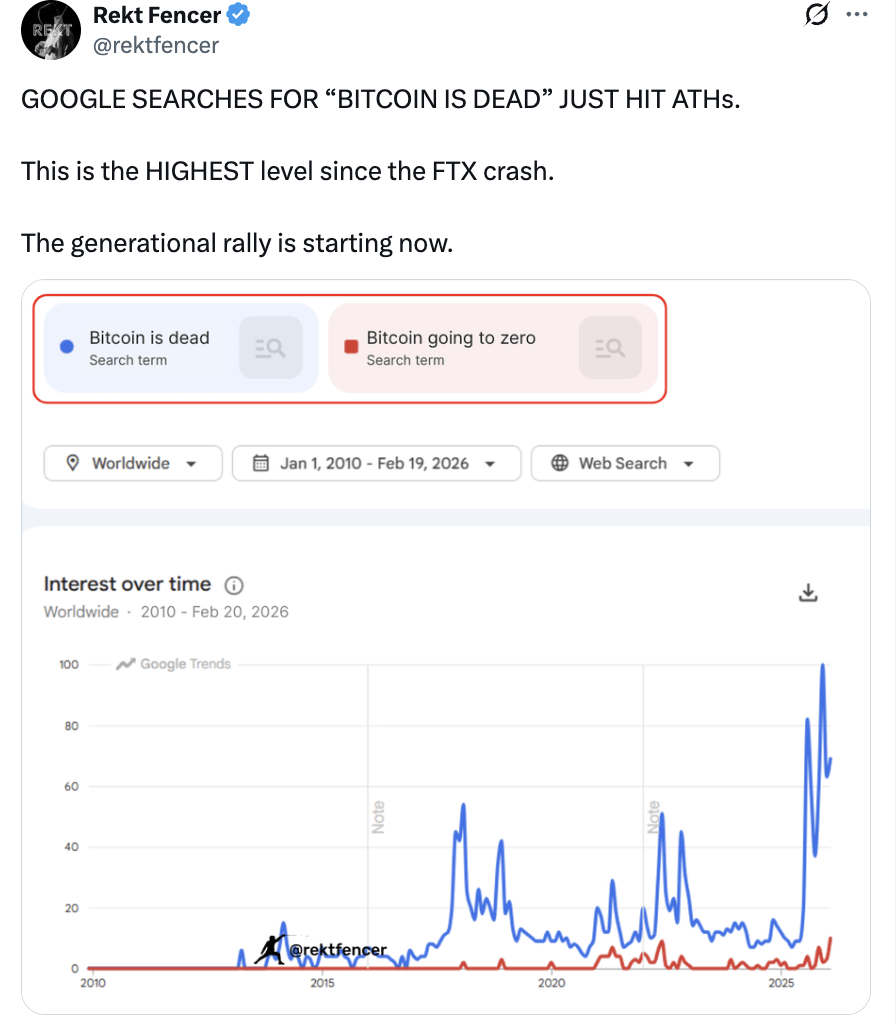
This dramatic spike in search queries directly correlates with a sharp decline in Bitcoin’s price. The leading digital asset plummeted nearly 50% from its 2025 peak of approximately $126,000, recently touching a low of around $63,000. The broader cryptocurrency market has not been spared, experiencing a staggering loss of over $2 trillion in market capitalization since October 2025, a downturn that has ignited widespread panic among retail investors.
Market analysts are interpreting this pervasive fear as a potential “capitulation” event – a phase of extreme pessimism that historically precedes a market rebound and signals a cyclical bottom. The desperation among retail investors is further underscored by record-high searches for “Bitcoin to zero,” occurring amidst institutional asset reallocation and significant sell-offs by miners.
A History of Resilience: Bitcoin’s Many ‘Obituaries’
Historically, pronouncements of Bitcoin’s demise are far from a new phenomenon. According to 99Bitcoins’ comprehensive tracking, the asset has been declared “dead” a remarkable 477 times since 2010. Past peaks in these “death” narratives have consistently coincided with substantial price corrections, typically ranging from 70% to 80%, only to be followed by robust recoveries and new all-time highs:
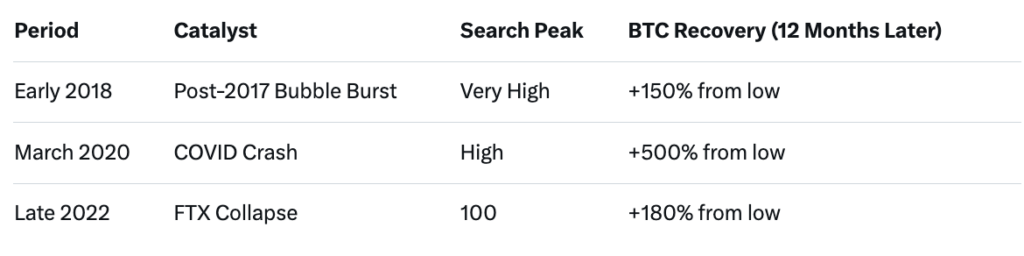
This recurring pattern suggests that the current surge in negative sentiment and search volume could indicate an exhaustion of selling pressure, particularly in the absence of a major “black swan” event. Indeed, underlying positive currents persist within the market. Data from DefiLlama highlights Binance’s resilience, reporting net inflows exceeding $3 billion over the past 7 days, a testament to the enduring confidence of some capital allocators.
In a tentative sign of recovery, Bitcoin has recently staged a modest rebound, climbing from $63,000 to above $67,000. While analysts point to an apparent exhaustion of short-term selling, they also caution that the current bearish phase could potentially be prolonged.
Beyond Price: The Evolving Landscape of Crypto
Beyond the immediate price fluctuations, broader trends indicate that the cryptocurrency market is undergoing a significant evolution rather than marching towards extinction. While speculative assets like meme coins and certain altcoins face headwinds, capital is increasingly gravitating towards real-world applications such as prediction markets. Polymarket, a prominent platform in this space, saw its trading volume soar to $21.5 billion in 2025, with an additional $12 billion recorded in January 2026. Following a $2 billion funding round, its valuation now stands at an impressive $11.6 billion.
Ethereum’s 2026 roadmap further emphasizes this shift towards utility, focusing on critical advancements in scalability and the seamless integration of Artificial Intelligence (AI). Initiatives like the ERC-8004 standard for AI agents are positioning Ethereum for mature, real-world application scenarios, moving beyond speculative trading to foundational infrastructure.
Conclusion: Navigating the Crossroads of Fear and Opportunity
If history serves as a guide, this current peak in market panic might well be a powerful contrarian buy signal, potentially marking the conclusion of the “crypto winter” and heralding a new era of utility-driven growth. However, investors must proceed with caution. Prevailing macroeconomic risks, including potential AI capital withdrawals and geopolitical instability, could extend market volatility. As the digital asset landscape continues to mature, discernment and strategic foresight will be paramount for navigating these complex currents.
Disclaimer: This article is provided for market information purposes only. All content and views expressed herein are for reference only and do not constitute investment advice. They do not necessarily represent the views or positions of the author or publisher. Investors should conduct their own due diligence and make independent investment decisions. The author and publisher will not bear any responsibility for direct or indirect losses incurred as a result of investor transactions.