US Senators Target Prediction Markets: A Looming Ban on Sports & Casino Contracts
In a significant legislative move reported by The Wall Street Journal, a bipartisan coalition of U.S. Senators is poised to introduce a new bill this Monday. The proposed legislation aims to prohibit federally regulated prediction market platforms from offering contracts tied to “sports events” and “casino-style games,” marking the U.S. Senate’s inaugural attempt to rein in this rapidly expanding industry.
The Proposed Legislation: A Sweeping Ban
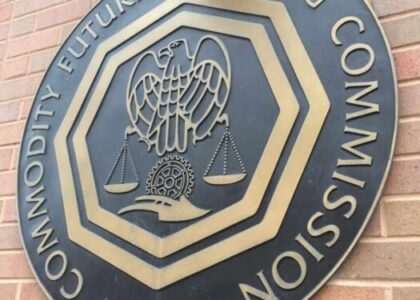
Spearheaded by Democratic Senator Adam Schiff and Republican Senator John Curtis, the bill advocates for a comprehensive ban on event contracts related to sports. This prohibition would specifically target platforms supervised by the U.S. Commodity Futures Trading Commission (CFTC), including prominent players in the U.S. market such as Kalshi and Polymarket.
Furthermore, the proposed ban extends its reach beyond sports to encompass “casino-style products.” This implies that prediction markets involving activities like slot machines, blackjack, poker, and bingo games would also fall under the new restrictions.
Senators’ Rationale: Closing a “Regulatory Loophole”
Senator Adam Schiff articulated strong concerns regarding the current regulatory landscape, stating, “The U.S. CFTC has not only given a green light to these markets but has also promoted their development.” He contends that Congress must address this “regulatory loophole,” which he argues “violates state consumer protection laws, infringes upon tribal sovereignty, and contributes nothing to government revenue.”
Senator John Curtis echoed these sentiments, emphasizing the impact on younger demographics: “Too many young people in Utah are being exposed to addictive sports betting and casino-style game contracts, which should be regulated by state governments, not federal regulators.”
Escalating Regulatory Turf War
This legislative initiative emerges amid a burgeoning dispute over the regulatory authority governing prediction markets, pitting federal regulators against state governments and the industry itself. While platforms like Kalshi and Polymarket offer “binary contracts” (derivative financial products where outcomes are binary: “yes” or “no”) across diverse sectors—from cryptocurrency and political elections to climate change and popular culture—a significant portion of their trading volume remains concentrated in sports events. This positions them in direct competition with established sports betting giants such as FanDuel and DraftKings.
The CFTC has consistently asserted its exclusive jurisdiction, maintaining that event contracts are inherently part of the derivatives market. In legal filings as recent as February, the CFTC even contended that state governments lack the authority to regulate these platforms.
States Strike Back, Industry Fights On
However, state governments are vigorously asserting their authority. Nevada recently secured a temporary injunction, successfully blocking Kalshi from offering prediction contracts linked to sports, elections, and entertainment. Arizona has escalated its efforts, filing a criminal lawsuit against Kalshi’s parent company, alleging the operation of an unlicensed, illegal gambling business. Kalshi, in response, has vehemently denied these accusations and urged Arizona to withdraw its suit.
The legal skirmish has now broadened across multiple U.S. jurisdictions. Both Massachusetts and Michigan have initiated lawsuits against Kalshi. In a proactive defensive maneuver, Polymarket sued Michigan earlier this month, seeking to prevent the state’s aggressive enforcement of gambling regulations. Further complicating matters, the U.S. Federal Ninth Circuit Court of Appeals recently denied Kalshi’s request for an emergency stay in the Nevada case, effectively empowering other states to impose similar bans.
Despite Hurdles, Capital Flows In
Despite the pervasive regulatory uncertainty, the lucrative potential of prediction markets continues to attract substantial capital. Kalshi and Polymarket are reportedly seeking funding at an impressive valuation of $20 billion. Wall Street titans such as Susquehanna International Group and Jump Trading are already active as market makers for Kalshi, and financial information service provider Tradeweb has forged a data partnership with the platform.
Sports Leagues’ Nuanced Approach
While some sports organizations express increasing concern over the potential for “match-fixing” and “insider trading” facilitated by prediction markets, Major League Baseball (MLB) has adopted a more nuanced stance. The MLB recently entered into a licensing agreement with Polymarket, granting the platform access to league data. This agreement, however, is contingent upon a deep collaborative effort to rigorously monitor and prevent any suspicious betting activities.
Disclaimer: This article is intended solely for market information purposes. All content and views are provided for reference only and do not constitute investment advice, nor do they represent the views and positions of BlockTempo. Investors should make their own decisions and transactions. The author and BlockTempo will not assume any responsibility for direct or indirect losses incurred by investors’ transactions.