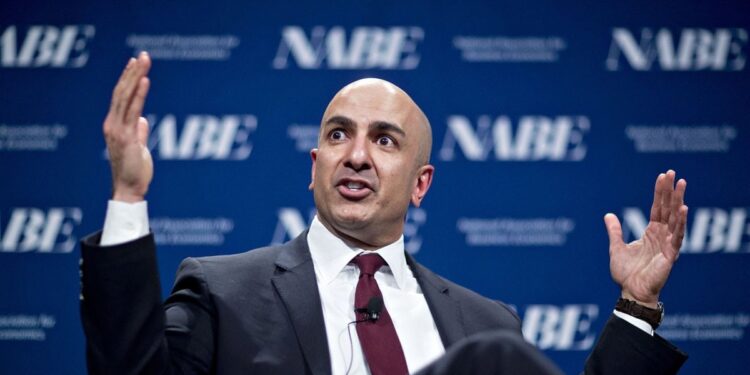
Federal Reserve Skepticism Clashes with White House Crypto Enthusiasm: Kashkari Dismisses Digital Assets as “Useless”
A stark ideological divide is emerging at the highest levels of U.S. financial policy. While the White House actively champions the integration of cryptocurrencies, the Federal Reserve appears to be striking a decidedly different, more cautious tone. Leading this charge of skepticism is Minneapolis Fed President Neel Kashkari, who recently launched a scathing critique against Bitcoin, stablecoins, and the broader digital asset landscape, declaring them to be without “any real use case.”
Kashkari’s Core Argument: A Decade Without Purpose
Speaking at the “2026 Midwest Economic Outlook Summit” in Fargo, North Dakota, Kashkari drew a sharp contrast between the burgeoning utility of artificial intelligence (AI) tools and the perceived stagnation of cryptocurrencies. “Cryptocurrencies have been around for over 10 years and are still useless,” he asserted, juxtaposing them against AI technology, which he believes “holds true long-term development potential for the US economy.”
To underscore his point, Kashkari engaged his audience in a direct comparison. He first inquired how many had utilized AI tools like ChatGPT or Gemini in the past week, then pivoted, asking for a show of hands from anyone who had “ever bought or sold something with Bitcoin.” The implication was clear: everyday practical application for crypto remains elusive for the vast majority.
Challenging the Promise of Payment Innovation
Kashkari reserved some of his strongest criticisms for stablecoins and their purported ability to revolutionize payments. He expressed profound doubt about their capacity to offer any concrete improvements over existing financial infrastructure.
“I listen to these technical terms, and it feels like I’m eating a plate of ‘buzzword salad,’ all just fancy jargon,” Kashkari remarked, challenging the perceived innovation.
“Is there anything I can do with stablecoins today that I can’t do with Venmo (a mainstream US mobile payment app)?” he pressed, highlighting the lack of a compelling value proposition for the average American consumer.
Cross-Border Payments: Benefits Not for the US?
The argument that stablecoins can facilitate cheaper and faster cross-border payments also failed to sway Kashkari. He countered that even proponents of cryptocurrency often concede that these benefits are not primarily aimed at U.S. consumers, who already enjoy a relatively efficient domestic payment system.
While acknowledging some growth in stablecoin adoption within certain emerging market countries, Kashkari pointed to significant practical hurdles. He noted that despite claims of “instant settlement,” recipients frequently face the inconvenience and cost of converting stablecoins into local fiat currency for everyday transactions, thereby negating much of the advertised efficiency.
The White House’s Divergent Vision: Crypto as a Strategic Asset
Kashkari’s profoundly skeptical outlook stands in stark opposition to the Trump administration’s robust embrace of digital assets. The White House has increasingly positioned Bitcoin and stablecoins not merely as financial innovations but as “national strategic tools” for bolstering U.S. economic power.
U.S. Treasury Secretary Scott Bessent recently articulated this vision, stating publicly that regulated stablecoins could significantly enhance the U.S. dollar’s dominance in the global payment system and solidify its status as the world’s premier reserve currency. Furthermore, propelled by Bessent’s advocacy, then-President Trump officially signed an executive order last March, paving the way for the establishment of a national “Strategic Bitcoin Reserve.”
Disclaimer: This article is for market information purposes only. All content and views are for reference only and do not constitute investment advice, nor do they represent the views and positions of BlockBeats. Investors should make their own decisions and trades. The author and BlockBeats will not be held responsible for any direct or indirect losses incurred by investors’ transactions.