
Bitcoin Funding Rates Plunge to Multi-Year Lows: A Potent Signal for an Imminent Short Squeeze?
On-chain data reveals that Bitcoin’s “funding rates” have plummeted to their most negative levels since 2023. Historically, this seemingly bearish indicator has often served as a powerful harbinger of a “market bottom” and the impending trigger for a “short squeeze.”
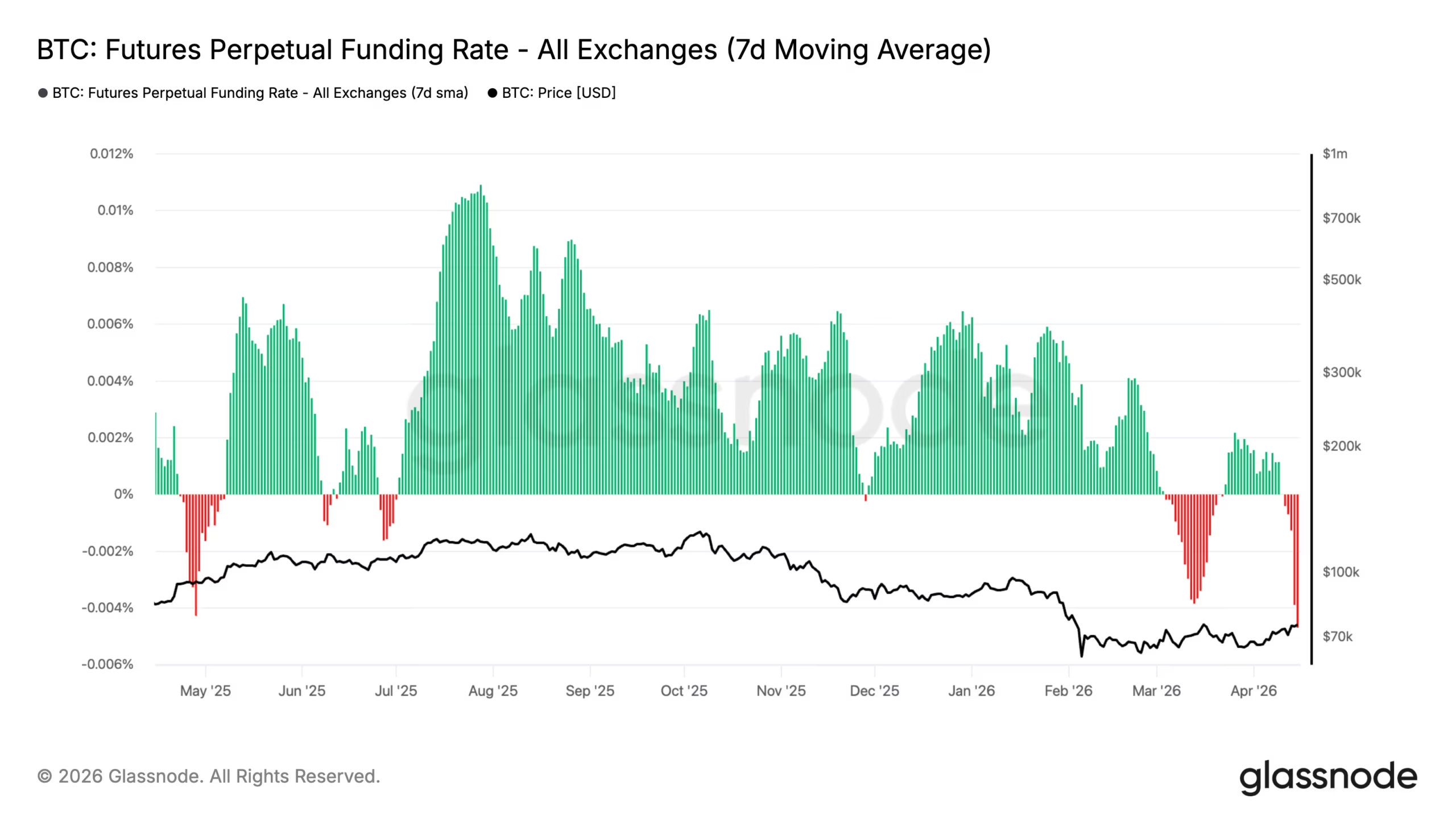
According to Glassnode data, the 7-day moving average of Bitcoin funding rates has sharply declined to approximately -0.005%.
Understanding Bitcoin Funding Rates
Funding rates are a crucial mechanism in perpetual futures contracts, facilitating regular fee exchanges between long and short positions. Their primary purpose is to keep the contract price closely anchored to the underlying spot market price. When funding rates are “positive,” it signals a prevailing bullish sentiment, with long position holders paying fees to short sellers. Conversely, a “negative” rate indicates widespread market pessimism, compelling short sellers to pay fees to long holders. This scenario implies that a significant portion of market capital is actively betting on a price decline.
The Divergence: A Classic Bottoming Signal
Intriguingly, between March and April of this year, despite a sustained period of negative funding rates, Bitcoin’s performance defied expectations. Rather than faltering, its price steadily ascended from just above $60,000 to approximately $75,000. This “negative rates, rising price” divergence is a historically significant characteristic of a “market bottom.” It typically signifies an overcrowded short position landscape, where any positive catalyst can ignite bullish sentiment, setting the stage for a dramatic short squeeze.
Historical Precedents: When Negative Rates Signaled Reversals
This compelling narrative has played out repeatedly across various Bitcoin market cycles:
- March 2020: The COVID-19 pandemic triggered a global market crash, sending Bitcoin plummeting to $3,000, accompanied by a sharp turn into negative funding rates.
- Mid-2021: China’s crackdown on Bitcoin mining saw the price halve to $30,000, with negative funding rates resurfacing.
- November 2022: The collapse of FTX pushed Bitcoin to a low of $15,000, and funding rates once again plunged into extreme negative territory.
- 2023: Amidst the Silicon Valley Bank crisis, Bitcoin briefly dipped below $20,000, with negative funding rates coinciding precisely with this market low.
The consistent appearance of negative funding rates has, time and again, accurately corresponded with significant market swing lows, underscoring this pattern’s reliability across a multitude of market-defining events.
Climbing a Wall of Worry: What Lies Ahead?
Presently, the phenomenon of persistent negative funding rates continues. Even as Bitcoin has recently demonstrated an upward trajectory, bearish sentiment in the derivatives market remains stubbornly entrenched. This striking divergence between price action and market sentiment strongly suggests that Bitcoin is currently “Climbing a Wall of Worry”—a market scenario where prices advance despite widespread doubt and pessimism. The accumulated short positions, built up by persistent bears, could very well become the ultimate fuel, propelling Bitcoin’s price to new highs in a powerful short squeeze.
Disclaimer: This article is intended solely for providing market information. All content and views expressed herein are for reference only and do not constitute investment advice. They do not represent the views or positions of the author or the publisher. Investors should exercise their own judgment and make independent trading decisions. The author and publisher will not bear any responsibility for direct or indirect losses incurred by investors as a result of their transactions.