By: Zen, PANews
The South Korean stablecoin market is undergoing a profound transformation, moving beyond initial discussions to concrete regulatory design and strategic market positioning. Over the past two weeks, a confluence of events – from increasingly open signals by central bank officials to substantive legislative progress, alongside high-level engagements by industry giants Circle and Tether – indicates a pivotal shift. South Korea’s approach to stablecoin regulation has evolved from theoretical exploration to the intricate realm of institutional design and stakeholder negotiation.
For global stablecoin issuers, South Korea is no longer a distant market to be observed cautiously. It has become a crucial strategic battleground, demanding proactive engagement to secure a foundational position in the future digital financial ecosystem.
From Prohibition to Pragmatism: South Korea’s Stablecoin Framework Takes Shape
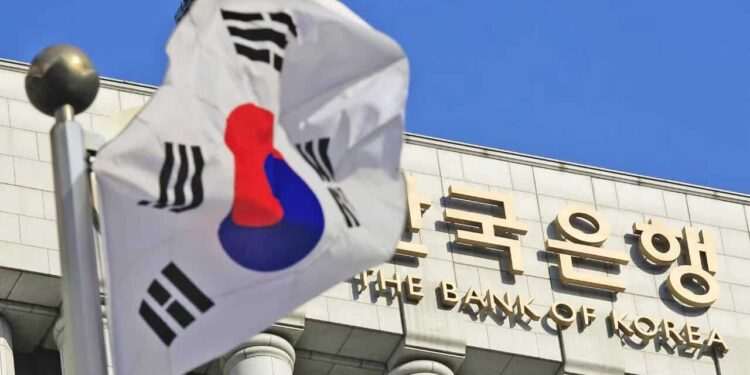
Recent shifts in top-tier policy sentiment have become unmistakably clear. On April 14, Shin Hyun-song, nominee for Governor of the Bank of Korea, stated that KRW stablecoins would play a future role in the monetary ecosystem, envisioning a relationship that is both complementary and competitive with central bank digital currencies (CBDCs) and deposit tokens. This statement, more open than previous remarks, has been widely interpreted by the market as a definitive signal of changing policy winds.
Earlier, senior Bank of Korea officials had suggested a phased introduction for KRW stablecoins, prioritizing issuance by strictly regulated commercial banks, with a gradual expansion to non-bank institutions based on accrued experience. This cautious approach underscores that South Korean regulators are not advocating for a complete deregulation but rather an initial integration within the banking system before considering broader market expansion.
Running in parallel is the “Project Han River,” an experimental initiative for deposit tokens. The Bank of Korea has advanced its pilot to the second phase, expanding participation to nine banks and planning to extend deposit token applications to more real-world payment scenarios. Public sector entities are also exploring its use for subsidies and fiscal expenditures, signaling South Korea’s commitment to institutionalizing bank-issued digital currencies.
Consequently, the current discourse in South Korea is no longer merely about “whether to permit stablecoins,” but rather how to establish a layered structure among KRW stablecoins, deposit tokens, and USD stablecoins. Key questions now revolve around who can issue them, how foreign institutions can gain entry, and what role local financial conglomerates will play – these are central to the next phase of institutional negotiation.
The emerging framework in South Korea is not monolithic; instead, a three-tiered parallel system is taking shape: one centered on bank-led deposit tokens, supplemented by regulated KRW stablecoins, and extended by conditionally integrated foreign USD stablecoins. Eligibility for issuance, compliant entry pathways for foreign institutions, and the role of domestic financial groups have become core issues in the next phase of policy debate.
Circle and Tether Accelerate Positioning: Distinct Entry Strategies for Korea
Within this critical window, Circle’s strategy appears particularly well-defined and aligns closely with South Korea’s current regulatory preferences.
On April 13, Circle Co-founder and CEO Jeremy Allaire explicitly stated at an event in Seoul that Circle does not intend to issue its own KRW stablecoin. In his view, a more probable model involves a consortium of local Korean banks, fintech companies, and digital asset operators leading KRW stablecoin issuance, with Circle providing mature stablecoin operational technology, platform capabilities, and cross-chain infrastructure support.
Furthermore, Allaire publicly declared Circle’s willingness to apply for a license and establish a local entity in South Korea if the future Digital Asset Basic Act provides a compliant entry pathway for overseas stablecoin issuers. This statement both acknowledges South Korea’s regulatory realities and demonstrates Circle’s intent to enter the market as a technology and platform provider.
Circle’s approach in South Korea is a multi-pronged strategy: actively engaging with regulators, discussing partnerships with banks, and exploring possibilities for exchange listings and payment pilot programs. Public information indicates that Circle has engaged with financial institutions like KB, Shinhan, and Hana regarding cross-border remittances, settlements, and RWA technology support, while also advancing collaborations with platforms such as Dunamu and Bithumb.
Notably, Circle is also evaluating how South Korea’s future Digital Asset Basic Act will frame the entry of overseas stablecoin issuers. Its public stance is not merely short-term marketing but aims to establish a long-term entry strategy centered on licensing, local entities, and technological partnerships. Rather than merely “selling a coin” in South Korea, Circle is attempting to secure a foundational infrastructure position.
In contrast, Tether’s public activities in South Korea have been more subdued but nonetheless present. In early April, Tether representatives visited South Korea, engaging with institutions such as KB Financial Group and Coinone to discuss potential collaborations. Disclosures suggest this round of visits continues a rhythm of engagement from the previous year, aimed at expanding stablecoin circulation and trading.
Tether’s narrative in South Korea leans more towards the demand side. In late March, Tether personnel attended an AMCHAM Korea stablecoin event, covering topics including global adoption, market expansion, and cross-border liquidity. Korean media subsequently quoted their remarks, highlighting South Korea’s relative lag in global payment infrastructure and positing stablecoins as a more efficient tool for cross-border e-commerce, travel consumption, and international settlements.
Comparatively, Circle appears to be integrating itself within South Korea’s regulatory logic. It acknowledges the high probability of KRW stablecoins being primarily issued by local institutions, thus emphasizing technology stacks, payment networks, and local compliance interfaces. Tether, conversely, seems to be entering via transaction, circulation, and payment demands, aiming to first solidify the use cases for its USD stablecoin network in South Korea.
This distinction dictates the differing priorities of the two companies in South Korea. Circle’s footprint is more public and systematic, focused on long-term operational qualifications post-policy implementation; Tether’s approach is more geared towards business engagement and network expansion, prioritizing increased USDT trading and payment penetration. The former is institutionally driven, while the latter is liquidity-driven.
The Eve of Battle: Contending for South Korea’s Stablecoin Market
Moving forward, the South Korean stablecoin market is highly likely to continue its progression along localized, layered, and gradual pathways, remaining some distance from full liberalization. South Korea’s ruling Democratic Party has pushed for related legislation to advance in a parliamentary bill subcommittee by the end of this month, but achieving true legislative consensus will still require time due to procedural complexities, local elections, and other priority issues.
Current debates still largely center on several core issues: whether the primary issuers of KRW stablecoins should be banks, if non-bank and fintech companies can participate, how restrictions on major shareholders of virtual asset exchanges should be designed, and whether foreign issuers must establish local entities or accept additional reserve and foreign exchange regulatory requirements.
In the short to medium term, South Korea is more likely to prioritize the development of domestic KRW stablecoins and bank-issued deposit tokens before determining the specific entry boundaries for foreign stablecoins.
For both Circle and Tether, the current race is not just for market share, but for who can secure an earlier position within the core interface layer of South Korea’s future digital currency system.
(The above content is an authorized excerpt and reprint from our partner PANews, original link)
Disclaimer: This article is for market information purposes only. All content and views are for reference only and do not constitute investment advice. They do not represent the views and positions of BlockTempo. Investors should make their own decisions and trades. The author and BlockTempo will not bear any responsibility for direct or indirect losses incurred by investor transactions.