By: Max, CryptoCity
Tether Steps into the Spotlight with ‘The People’s Wallet,’ Championing Financial Inclusion
Tether, the world’s leading stablecoin issuer, officially announced the launch of its native self-custody digital wallet application, tether.wallet, yesterday (April 14th). This move signifies a pivotal shift for the company, long recognized as a foundational infrastructure provider in the blockchain space, as it now directly enters the consumer application market.
Paolo Ardoino, CEO of Tether, highlighted that over 570 million people globally already leverage Tether’s technology. With the introduction of tether.wallet, the company aims to deliver this robust financial infrastructure directly into the hands of end-users.
For the past decade, Tether has primarily operated behind the scenes, providing liquidity and settlement services to over 160 countries worldwide, particularly aiding developing nations lacking traditional banking access or grappling with high inflation. Ardoino describes this new product as “The People’s Wallet,” underscoring its foundational purpose: to make digital asset access and usage more approachable and inclusive.
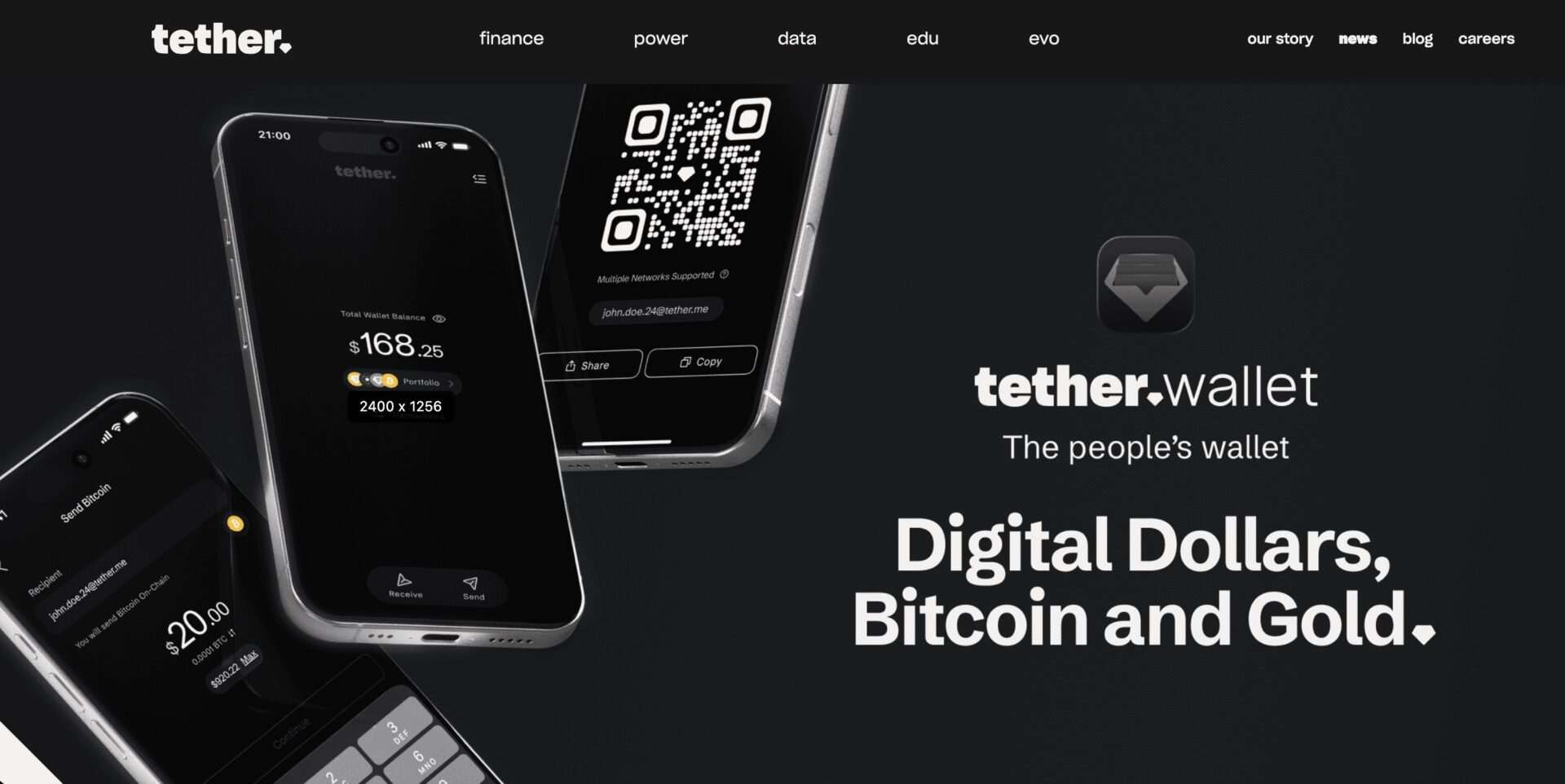
As digital assets reach new milestones, Tether’s objective is to dismantle the complexities that have historically hindered mainstream crypto adoption, while steadfastly preserving the core values of digital assets. This wallet is designed not just for human users but is also primed for a future where billions of automated machines and trillions of AI agents can execute seamless, lightning-fast transactions. With this application, Tether evolves from a foundational clearing protocol into a comprehensive financial services platform, empowering global users to gain complete control over their assets without relying on intermediaries.
Revolutionizing User Experience: Streamlined Accounts and Innovative Fee Structures Address Blockchain Friction
To significantly enhance user experience, tether.wallet introduces several groundbreaking technical innovations, directly addressing the “friction” points that often deter newcomers from engaging with blockchain operations.
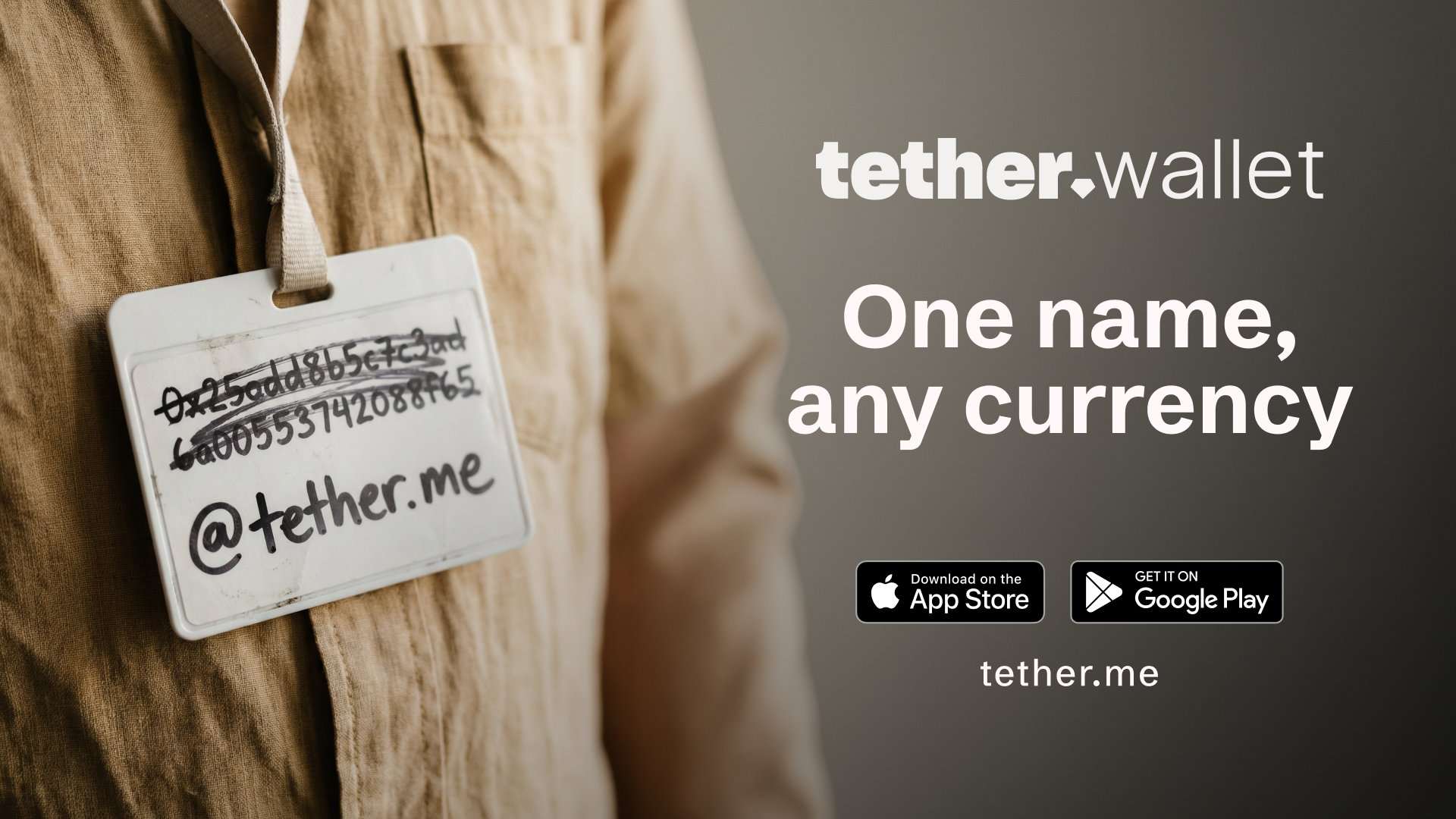
Firstly, the system replaces lengthy and error-prone hexadecimal string addresses, common in traditional blockchain, with human-readable identifiers such as “[email protected]”. Users can now conduct transfers using these simple, memorable names, drastically reducing the risk of irreversible errors associated with manual input or copy-pasting complex addresses. This design makes digital asset transfers as intuitive as sending an email or a message, aligning with everyday communication habits.
Furthermore, the wallet resolves a persistent pain point: transaction fees. In most decentralized finance (DeFi) scenarios, users must hold the native token of a network (such as Ethereum’s $ETH or Polygon’s $POL) to pay gas fees before transferring stablecoins—a significant barrier for many new users. tether.wallet allows users to pay network fees directly with the asset they are sending. For instance, when transferring $USDT, the system automatically deducts an equivalent amount of $USDT as the transaction fee. This mechanism liberates users from the burden of acquiring and maintaining multiple network tokens, truly enabling the seamless flow of a single asset.
Curated Cross-Chain Asset Support & Open-Source WDK: Fueling the Future of AI-Driven Transactions
In terms of asset support, tether.wallet adopts a strategic approach, offering a select suite of high-value assets.
The initial lineup includes Tether’s flagship stablecoin $USDT, $USAT (developed for the US market), $XAUT (a token pegged to physical gold), and Bitcoin ($BTC). Regarding blockchain network coverage, the wallet currently integrates Ethereum, Polygon, Arbitrum, and Tether’s proprietary Plasma network. Bitcoin support extends beyond traditional on-chain transactions, fully integrating the Lightning Network to ensure instant and low-cost micro-payments.
Tether has stated that following the initial release, support for more mainstream public blockchains will be continuously added.
The technical backbone of this wallet is Tether’s open-source Wallet Development Kit (WDK). This modular toolkit not only supports human users but also empowers developers, financial institutions, and AI agents to build self-custody digital asset wallets with greater ease, without reliance on centralized service providers.
In January of this year, the video platform Rumble became an early adopter, leveraging this development kit to integrate $USDT and Bitcoin payment functionalities. Tether is committed to constructing an open and neutral financial system, enabling the digital economy to operate across diverse devices and platforms, and playing a central role in the future intelligent transaction environment.
- Related News: Receive Payments Without a Bank! Tether Collaborates with Video Platform Rumble to Launch Integrated Crypto Wallet
Upholding Self-Custody and Security: Tether’s Bid for Stablecoin Retail Dominance
Security and autonomy are core tenets of tether.wallet. The wallet operates on a fully self-custodial model, meaning private keys and seed phrases remain exclusively under the user’s control. All transaction signing occurs locally on the user’s device, ensuring Tether itself has no access to user funds.
While the wallet also offers a cloud key backup option—a feature that has sparked community discussion regarding the balance of security—Tether emphasizes its design goal: to provide a simpler path for asset recovery while preserving the fundamental advantages of self-custody.
Tether’s CEO underscored that financial systems should be open and free from intermediary interference, and tether.wallet embodies the spirit of returning asset control to the user.
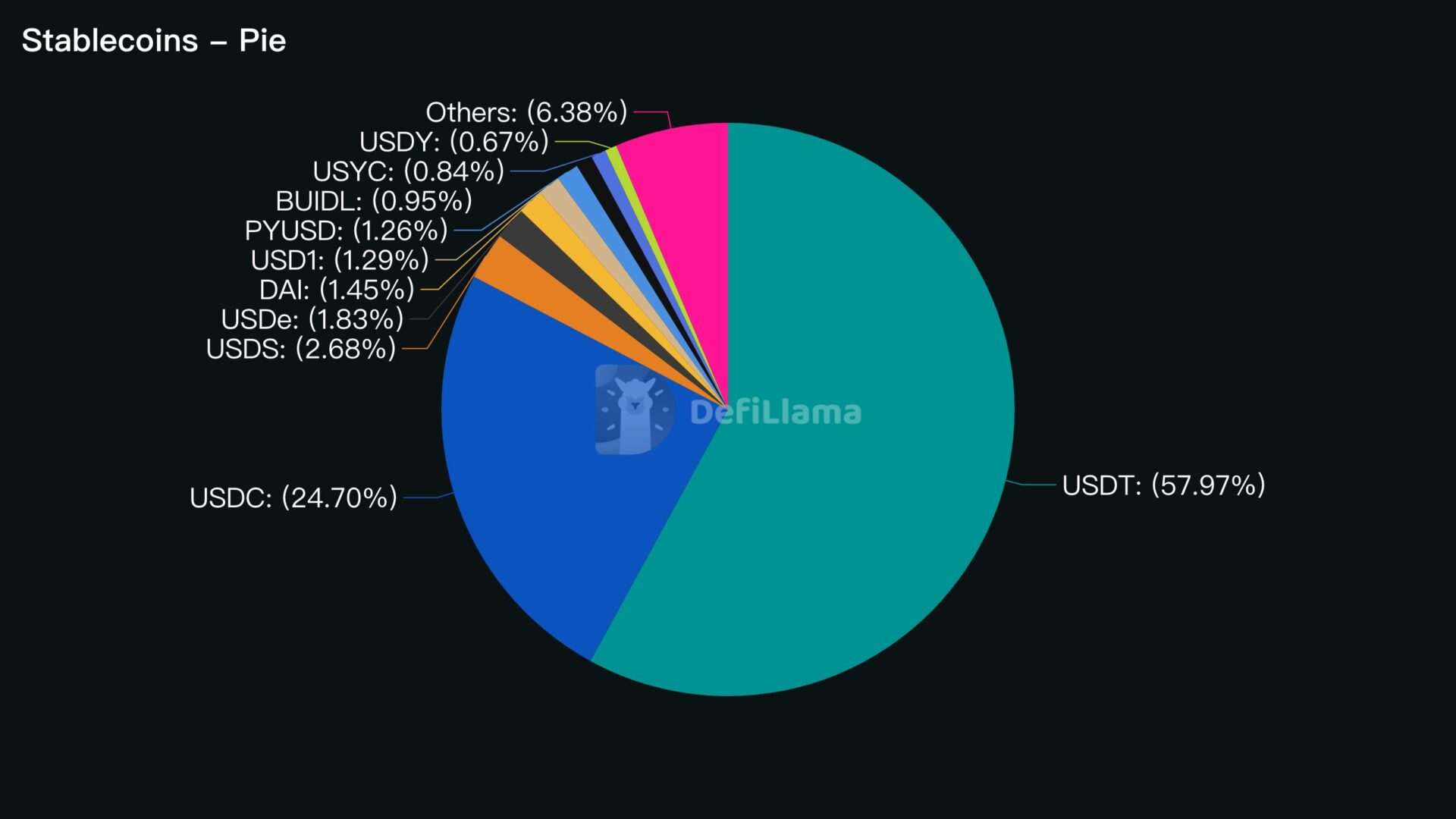
According to DefiLlama data, the market capitalization of $USDT has now surpassed $184 billion, commanding approximately 58% of the total stablecoin market, valued at around $317 billion.
With the launch of this wallet, Tether will directly compete with established players in the market such as MetaMask, Trust Wallet, and Phantom. Furthermore, Tether has been highly active recently, including the development of the QVAC SDK for on-device AI and the successful launch of its gold token $XAUT on BNB Chain, amidst a backdrop of gold prices rising 64% in 2025.
As of Q3 2025, Tether’s holdings of physical gold reached 116 metric tons, positioning it as one of the largest non-sovereign gold holders globally. By integrating stable value-pegged assets with convenient retail tools, Tether is strategically positioning itself across the entire spectrum of the future digital payment landscape.
(The above content is an authorized excerpt and reproduction from our partner “CryptoCity”, original link)
Disclaimer: This article is for market information purposes only. All content and views are for reference only and do not constitute investment advice. They do not represent the views and positions of BlockTempo. Investors should make their own decisions and trades. The author and BlockTempo will not bear any responsibility for direct or indirect losses incurred by investors’ transactions.