UK Accelerates Digital Finance Revolution: A Deep Dive into Tokenization and Stablecoin Strategy
The United Kingdom is taking decisive steps to cement its position at the forefront of the global digital finance landscape. Recent moves by the Financial Conduct Authority (FCA) and the Bank of England (BoE) signal a comprehensive push to integrate digital assets into mainstream financial systems, with a particular focus on tokenization and the strategic role of stablecoins.
UK Forges Ahead with Tokenized Wholesale Finance
In a significant stride, the FCA and the Bank of England recently issued a joint consultation paper, actively seeking industry input on the regulatory framework for “tokenized wholesale financial markets.” This initiative underscores the UK’s ambition to rapidly onboard digital assets into its core financial infrastructure.
The UK government has explicitly identified tokenization as a cornerstone of its digital financial market strategy. It highlights the immense potential of this technology in enhancing post-trade clearing, streamlining collateral management, and boosting asset liquidity. The consultation targets a broad spectrum of financial entities, including banks, investment firms, asset managers, trading platforms, fintech innovators, and securities infrastructure providers, with responses due by July 3rd.
Regulators have also announced plans to release a more comprehensive cross-departmental roadmap and a response document later this year. This will be complemented by a series of industry workshops, all designed to cultivate a clear legal and regulatory environment that encourages investment and expansion in tokenized financial infrastructure.
This proactive stance by the UK reflects a broader shift in global regulatory priorities. While past attention often centered on speculative cryptocurrency trading and retail investor risks, the focus is now firmly gravitating towards institutional-grade applications. These include advanced digital clearing systems, tokenized bonds, equities, and sophisticated collateral management solutions.
Bank of England Embraces Multi-Currency Digital Payments
Further solidifying the UK’s commitment to digital transformation, Sarah Breeden, Deputy Governor for Financial Stability at the Bank of England, outlined a visionary future for the UK’s retail payment system during her address at City Week 2026 in London. Breeden articulated a future where a “multi-currency coexistence” model would prevail, seamlessly integrating traditional bank deposits, tokenized deposits, regulated stablecoins, and potentially a central bank digital currency (CBDC).
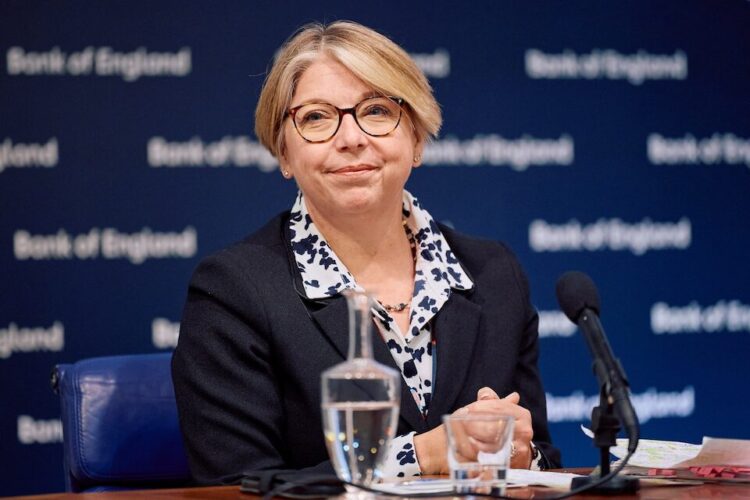
Breeden emphasized how shared ledger technology and smart contracts possess the transformative power to make payments faster, more economical, and reduce reliance on intermediaries. She highlighted the significant potential for improved efficiency across payments, clearing, and collateral management through programmable financial infrastructure.
“In addition to traditional bank deposits, people should also be able to use tokenized bank deposits, regulated stablecoins, and potentially retail central bank digital currency for payments,” Breeden stated, underscoring the Bank’s forward-looking perspective.
The Bank of England also revealed its intention to publish a draft regulatory framework for systemic stablecoins next month, aiming to finalize the rules by the end of the year. Crucially, the Bank is re-evaluating its previously controversial proposals for stablecoin holding caps, which had suggested limits of £20,000 for individuals and £10 million for businesses on single GBP stablecoin holdings. These initial proposals faced strong industry backlash, with many arguing they would diminish the UK’s attractiveness in the global digital finance race. Related news: UK Central Bank’s Strict Stablecoin Holding Cap Proposal Faces Industry Backlash: Violates Decentralization Principles
Adapting Regulation: From Strict Limits to Strategic Growth
The UK’s crypto industry had previously voiced strong criticism, labeling the Bank of England’s initial stablecoin regulations as among the most conservative globally. Early drafts, for instance, proposed that stablecoin issuers hold at least 40% of their reserves in interest-free central bank accounts, a measure widely seen as significantly compressing business models and profit margins.
- Katie Harries, Head of UK Policy at Coinbase, suggested that a “total issuance cap” might be a more viable alternative to individual holding limits. She also highlighted that no other major jurisdiction globally was considering managing stablecoins by limiting innovation scale in this manner.
- Simon Jennings, Executive Director of the UK Cryptoasset Business Council, argued that regulatory measures should be grounded in actual supervisory data and risk indicators, rather than imposing excessive restrictions before the market has fully matured.
Responding to this feedback, Breeden indicated that the Bank of England is now considering “total issuance limits” as a replacement for individual holding caps. This revised approach aims to mitigate potential impacts on financial stability and lending capacity—should significant bank deposits shift into stablecoins—at a lower cost to the industry. Related news: Bank of England to Relax Stablecoin Regulations! Deputy Governor Admits Early Proposals Were Too Conservative
The Digital Securities Sandbox: A Crucible for Innovation
Beyond stablecoin policy, the UK is also accelerating the development of its tokenized financial market infrastructure. A key initiative is the “Digital Securities Sandbox” (DSS), a regulatory environment that enables businesses to test the issuance, trading, and clearing of tokenized securities under live regulatory conditions. The first phase of the DSS has already attracted 16 firms, including major financial institutions like HSBC, Euroclear, and the London Stock Exchange Group, with related services expected to launch by the end of 2026. Related news: UK Financial Transformation! “Digital Securities Sandbox” Officially Introduced, How Will It Develop?
The Bank of England has clarified that the regulatory principles for tokenized assets will align with those for traditional financial assets. This means that if the legal rights and inherent risks are identical, the prudential treatment for banks holding tokenized assets will be the same as for their non-tokenized counterparts.
Furthermore, the Bank of England plans to extend the settlement hours for its RTGS and CHAPS payment systems, gradually moving towards near 24-hour operation, and even considering the inclusion of weekend settlements in the future. Officials anticipate direct integration with tokenized asset networks as early as 2027, a move poised to significantly enhance the UK financial market’s competitive standing in the global digital finance arena.
The Global Race for Digital Financial Leadership
In recent years, nations and blocs including the United States, Singapore, Hong Kong, Japan, and the European Union have all been actively developing stablecoin and tokenized financial frameworks. The renewed embrace of the crypto industry by the Trump administration in the US, for instance, has added pressure on the UK to ensure its regulatory policies remain internationally competitive.
The Bank of England’s evolving stance underscores a rapid transformation in how central banks worldwide perceive blockchain and digital assets. Regulators are increasingly focused on fostering innovation within a framework that preserves financial stability and market trust, while simultaneously driving the development of next-generation financial infrastructure.
In her concluding remarks, Sarah Breeden emphasized that the current mission for the UK is to foster collaboration between government, regulators, and the industry to build a truly functional and impactful tokenized financial ecosystem. As stablecoins, tokenized deposits, and on-chain payment infrastructures mature, global financial markets are officially entering a new, intensified phase of digital finance competition.