Mr. Wonderful’s Investment Playbook: Kevin O’Leary Shares Essential Strategies for Stocks, AI, and Bitcoin
By Ariel, CryptoCity
In a recent expert interview with GQ Taiwan, “Mr. Wonderful” Kevin O’Leary, the renowned investor from the hit American venture capital show Shark Tank, unveiled his candid insights on navigating today’s complex financial markets. With an estimated net worth of $400 million, O’Leary tackled pressing questions from aspiring investors, offering his unique perspective on everything from the timeless debate of individual stocks versus ETFs, to the burgeoning AI sector, and the ever-controversial topic of Bitcoin’s investment viability.
The ETF Advantage: Why Beating the Market is a Myth
Kevin O’Leary firmly believes that for most investors, attempting to outperform the broader market index is a losing game. His advice is unequivocal: instead of trying to pick individual winning stocks, it’s far more prudent to invest directly in the market itself.
“Don’t believe me?” he challenges. “Take $1,000 to pick individual stocks, and another $1,000 to invest in an S&P 500 tracking ETF like SPY. You’ll find that 90% of the time, you simply cannot beat the market.”
For gaining exposure to the S&P 500, O’Leary highly recommends low-cost ETFs such as VOO. He strongly advises against mutual funds, citing their prohibitive fees and lack of tax efficiency as significant drawbacks.
Embracing Dividend Income: A Smart Investment Strategy
When it comes to dividend-paying stocks and ETFs, O’Leary is a strong proponent. However, he stresses the importance of careful selection. The key, he explains, is to choose dividend indexes (like O USA) that comprise companies distributing dividends from their genuine free cash flow generated through operations. In essence, ensure the company is returning profits to you, rather than taking on excessive debt simply to sustain dividend payments.
Building Your Wealth: A Step-by-Step Guide to Portfolio Allocation
For those looking to embark on their investment journey, Kevin O’Leary offers a straightforward yet powerful strategy. If you have a steady income, he suggests automatically deducting 10% to 15% of your monthly salary and directing it into market ETFs or a diversified stock-bond portfolio.
A cornerstone of his philosophy is diversification: never concentrate all your capital in a single asset. His personal rule dictates that no single industry should constitute more than 20% of your total investment, and no individual stock or bond should exceed 5%.
Age-Based Portfolio Adjustments: Adapting to Your Life Stage
O’Leary emphasizes that your portfolio allocation should evolve with your age and risk tolerance:
- In your 20s: With a longer investment horizon, you can afford to take on more risk for higher long-term market returns. He suggests allocating 70% to stocks and 20% to 30% to fixed income (bonds).
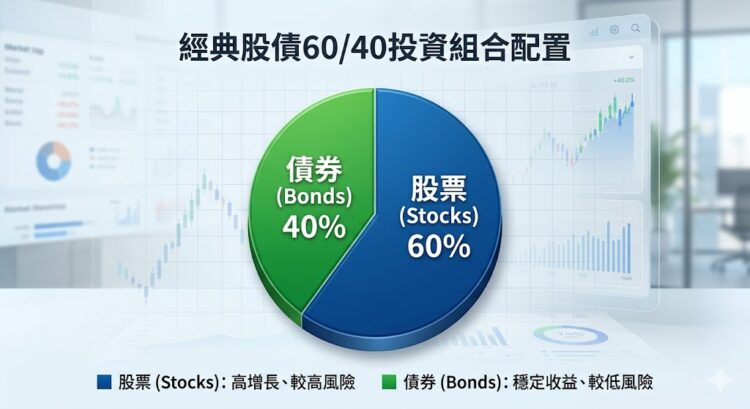
- In your 50s: Having accumulated substantial assets, it’s time to reduce risk. A recommended adjustment is a 60% stock / 40% fixed income (60/40) ratio.
- In your 60s: Further risk reduction is advisable, moving towards a balanced 50% stock / 50% fixed income allocation.
The AI Revolution: Bubble or Breakthrough?
With AI concept stocks surging, many investors are concerned about an impending AI bubble. Kevin O’Leary offers a historical perspective, reminding us that similar fears plagued the internet in the 1990s, only to be proven wrong. Likewise, companies like Apple, Amazon, and Netflix were once deemed overvalued but ultimately validated their immense growth potential.
“AI is driving monumental changes across productivity, profit margins, customer acquisition costs, and robotics, impacting virtually every sector within the S&P 500,” O’Leary asserts. While he admits only time will definitively tell if it’s a bubble, he firmly believes that groundbreaking technology historically justifies its value in the long run.
Palantir: The New Oil of the Digital Age?
Regarding Palantir, O’Leary sees immense potential. He views the company as a steward of data – “the new oil” – empowering governments and enterprises to extract insights, enhance efficiency, and propel AI development. Its revenue, he notes, is nothing short of astonishing. Whether it’s currently overvalued remains to be seen, but its performance to date has been exceptionally strong.
Strategic Allocation: Bitcoin and Gold in Your Portfolio
Kevin O’Leary views Bitcoin as a worthy investment, citing his long-term bullish outlook on cryptocurrencies and digital payment systems. He boldly predicts that within the next five years, cryptocurrencies will achieve regulatory legitimacy, becoming the 12th sector of the S&P.
However, this bullish stance doesn’t translate to an all-in bet. O’Leary strictly adheres to his diversification principle, ensuring that no single industry, including crypto, exceeds 20% of his investment portfolio.
His approach to gold is similar. While acknowledging gold as a valuable asset, he cautions against over-allocation. In his personal portfolio, only 5% is dedicated to gold, primarily through gold ETFs (GLD) and, to a lesser extent, physical gold bars which incur storage fees.
Beyond Large Caps: The Power of Small-Cap and International Diversification
The notion that “large-cap stocks always outperform small and mid-cap stocks” is a common misconception, according to Kevin O’Leary.
He highlights that smaller companies, such as those within the Russell 2000 index, often exhibit faster growth rates than their large-cap counterparts (S&P 500). Under specific economic conditions, like periods of low interest rates, small and mid-cap stocks frequently surpass large-cap performance.
Furthermore, true diversification extends beyond asset classes to include geographical exposure. Investing in international markets (e.g., European markets) via ETFs is crucial, as there will inevitably be years when these markets outperform the S&P 500. Predicting which year this will occur is impossible, making global diversification a non-negotiable strategy.
The Illusion of Prediction: Why Chasing “Exploding” Industries is Folly
No one, not even seasoned investors like Kevin O’Leary, can accurately forecast which industries or stocks will “explode” next. He points out a compelling statistic: in the last three years, the majority of the S&P 500’s returns were driven by just seven stocks. Yet, there’s no guarantee these leaders will maintain their dominance indefinitely.
Therefore, O’Leary’s core message remains consistent: focus on maintaining robust diversification and rigidly adhering to the discipline of ensuring no single stock accounts for more than 5% of your total portfolio.
Should a stock (like Tesla, which he has held for nearly a decade) appreciate beyond this 5% threshold, he advises taking profits to rebalance it back to a safe 5% allocation.
Watch the full GQ Taiwan interview with Kevin O’Leary below:
GQ Taiwan’s Kevin O’Leary Interview Video