By Max, CryptoCity
U.S. Stablecoin Regulation Accelerates: OCC Targets November for Final GENIUS Act Rules
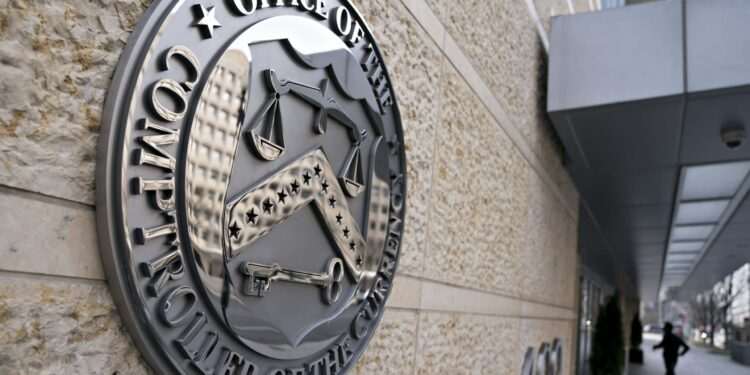
The landscape of U.S. stablecoin regulation is rapidly moving from legislative intent to practical implementation. Jonathan Gould, Acting Comptroller of the Currency (OCC), announced on August 19th that the OCC aims to finalize the core rules for the GENIUS Act by November of this year. This pivotal step is set to establish a comprehensive federal regulatory framework for payment stablecoins.
Speaking at the Wyoming Blockchain Symposium in Jackson Hole, Gould confirmed that the OCC has proactively begun drafting these crucial rules. The agency is currently consolidating industry feedback on its proposals, signaling a strong commitment to meeting its ambitious timeline for the final version.
The GENIUS Act, signed into law by then-President Donald Trump in July 2025 (note: original article states July 2025, which is in the future), represents a landmark achievement, creating the first federal-level regulatory structure for payment stablecoins in the U.S. This framework encompasses critical provisions for reserve assets, redemption mechanisms, supervisory oversight, custody arrangements, and issuer qualification criteria.
Under current stipulations, the GENIUS Act is slated to take effect on January 18, 2027, or 120 days after the primary regulatory bodies publish their final implementing rules, whichever comes first. The OCC’s ability to finalize these rules by November will provide stablecoin issuers with invaluable clarity and preparation time, facilitating a smoother transition into the new regulatory era.
Key Regulatory Pillars: Reserves, Redemption, and Custody Under Scrutiny
The rules currently being formulated by the OCC address several foundational requirements for stablecoin issuers. These include meticulous management of reserve assets, robust token redemption protocols, a clear regulatory oversight system, secure asset custody solutions, and a defined application process for entities seeking to qualify as payment stablecoin issuers.
A core tenet of the GENIUS Act is the mandate for regulated payment stablecoins to maintain full reserves, primarily backed by U.S. dollars and other highly liquid assets. Furthermore, the Act imposes additional audit and information disclosure requirements on larger stablecoin issuers, enhancing transparency and accountability.
However, certain technical specifics remain subjects of industry debate. Earlier this year, BlackRock submitted feedback to the OCC, advocating against overly stringent proportional limits on tokenized reserve assets and requesting an expansion of eligible reserve assets. Such restrictions could directly impact the utility of tokenized money market funds, like BUIDL, as stablecoin reserves.
Gould emphasized that the OCC remains open to input from cryptocurrency enterprises and other market participants. He indicated that the final version published in November might feature modifications based on this feedback, potentially differing from the current proposals.
Digital Assets Reshaping the Banking Landscape: A Surge in Charter Applications
As the regulatory framework gains clarity, the U.S. financial sector is witnessing a significant surge in demand for digital asset banking licenses. Gould revealed that over the past 18 months, the OCC has received approximately 40 new bank charter applications, with 23 of these business plans specifically incorporating digital asset operations.
This marks an approximate eightfold increase in digital asset charter applications compared to the entire four-year period of the Biden administration. Notably, payment stablecoins are becoming an increasingly common feature within the business plans of prospective applicants engaging with the OCC.
In recent years, numerous cryptocurrency and fintech firms have sought federal banking regulatory status through the OCC, aiming to establish comprehensive services ranging from stablecoin issuance and digital asset custody to payment solutions. For instance, Payoneer applied this year to establish PAYO Digital Bank, with plans to issue a U.S. dollar stablecoin, PAYO-USD, and offer digital asset custody services.
Gould reiterated that the regulator’s primary responsibility is to safeguard the soundness and long-term competitiveness of the banking system while simultaneously enabling qualified new entrants to access the market. The OCC’s review of bank applications will continue to prioritize robust capital, effective risk management, strong governance, and unwavering compliance capabilities.
A Dual-Track Regulatory Path: Federal and State Oversight, with a $10 Billion Threshold
The GENIUS Act introduces a dual-track regulatory structure, encompassing both federal and state oversight. Stablecoin issuers with a circulation volume below $10 billion have the option to choose state-level regulation, provided the respective state framework meets a standard “substantially similar” to federal guidelines.
In alignment with this approach, the New York Department of Financial Services (NYDFS) proposed its own stablecoin regulatory framework this year, harmonizing with the GENIUS Act. This proposal maintains key requirements such as 1:1 U.S. dollar reserves, robust redemption mechanisms, and independent audits, while also introducing limits on reserve asset concentration and enhanced risk management protocols.
The future U.S. stablecoin market will thus operate under a hybrid system of federal and qualified state-level regulations. For major players like Circle and Paxos, as well as banks and fintech companies aspiring to enter the stablecoin market, the finalization of these rules will directly influence their eligibility for issuance, reserve allocation strategies, and operational costs.
From Legislation to Execution: U.S. Stablecoin Regulation Enters Final Preparation
With the GENIUS Act now enshrined in law, the focus of U.S. stablecoin policy has decisively shifted towards implementation details. One of the OCC’s critical responsibilities is to translate the Act’s broad principles into actionable regulatory rules that financial institutions and stablecoin issuers can practically adhere to.
With only a few months remaining until the November deadline, crucial elements such as the scope of eligible reserve assets, precise redemption mechanisms, custody requirements, the issuer application process, and the division of supervisory responsibilities between federal and state authorities will form the core of the final rules.
The notable increase in digital asset-related bank charter applications and the growing inclusion of payment stablecoins in the business strategies of more financial institutions underscore the market’s anticipation. Should the OCC successfully finalize these key rules by its scheduled November target, U.S. stablecoin regulation will transition from its legislative phase to formal execution, providing the market with much-needed clarity on compliance requirements well in advance of the new system’s effective date in 2027.
(The above content is an authorized excerpt and reprint from our partner CryptoCity. Original link here.)
Disclaimer: This article is for market information purposes only. All content and views are for reference only and do not constitute investment advice. They do not represent the views and positions of BlockTempo. Investors should make their own decisions and transactions. The author and BlockTempo will not bear any responsibility for direct or indirect losses incurred by investors’ transactions.