Beyond the Headlines: Is the Fed’s ‘Hawkish’ Stance a Hidden Catalyst for Bitcoin and Gold?
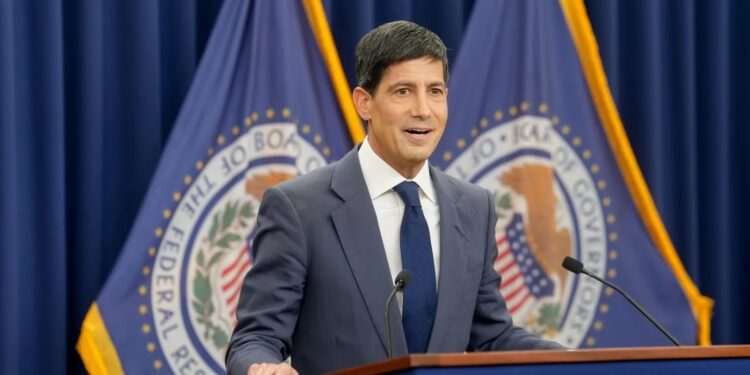
Global financial markets opened Monday under a cloud of uncertainty. Escalating geopolitical tensions coupled with hawkish remarks from Federal Reserve Chairman Kevin Warsh at the prestigious Jackson Hole Economic Symposium ignited widespread fear of a potential interest rate hike in September.
However, a closer examination of the actual pricing in the CME Fed Funds Futures market suggests that much of the social media-fueled anxiety might be “self-inflicted.” For assets like Bitcoin and gold, which witnessed impressive gains of 23% and 10% respectively in August, the bullish momentum appears far from exhausted.
Decoding the Fed’s Intent: Data vs. Rhetoric
According to the CME FedWatch tool, as of publication, the market-implied probability of a September rate hike stands at just 58%. This is significantly lower than the 90%+ level typically considered a “done deal,” and even below the 60-70% threshold the Fed often adheres to when aiming to avoid surprising the market.
Jim Bianco, founder of independent research firm Bianco Research, echoed this sentiment on social media platform X, stating, “The Fed’s next policy meeting is indeed leaning towards a rate hike, but it is not a done deal.”
Warsh’s comments, which fueled the initial panic, highlighted inflation data as “more concerning” than labor market trends, emphasizing the difficulty of inflation naturally returning to target. He specifically pointed to the Fed’s preferred inflation gauge, the Personal Consumption Expenditures (PCE) price index, which currently sits at an annual growth rate of 3.7% – unsettlingly above the central bank’s 2% policy target.
He further noted that over the past year, more than half of the goods and services tracked by the government saw price increases of 3% or more, a stark contrast to the pre-pandemic two decades where only about one-third reached this level. These remarks were quickly interpreted as a strong hawkish signal, sparking fervent discussions on social media about a potential 25-basis-point hike in September. The current U.S. benchmark interest rate remains in the 3.5% to 3.75% range.
In response to the news, Bitcoin experienced a 3% dip on the day, falling below $77,000 and marking its first significant pullback since its surge from $63,000 to $80,000 earlier in the month. Gold also trended lower, while the U.S. Dollar Index and Treasury yields simultaneously climbed.
“Fake Tightening, Real Support”: A Deeper Look at Fed Strategy
However, Jim Bianco isn’t alone in his skepticism regarding the true implications of a potential rate hike. Institutions like ABN AMRO Investment Solutions and Brandywine Global Investment Management share a similar perspective.
Robin Brooks, a senior fellow at the Brookings Institution and former Chief Economist at the Institute of International Finance (IIF), offered a compelling analysis. He suggests that even if the Fed does hike rates in September, its primary objective would be to soothe anxieties in the U.S. Treasury market, rather than to enact genuine monetary tightening. This strategic move would signal to the market that the Fed’s credibility in combating inflation remains intact, thereby reducing the risk premium demanded by investors holding longer-dated bonds and effectively suppressing a surge in long-end yields. Brooks elaborated:
“If there is indeed a September hike, its main function will be to anchor 10-year U.S. Treasury yields, preventing a repeat of the bond market’s severe sell-off experienced after July 29th. Therefore, the true intention behind this rate hike is diametrically opposed to traditional tightening. This is precisely why the ‘Debasement Trade’ – where investors strategically allocate to scarce assets like gold and Bitcoin to hedge against fiat currency depreciation and increased money supply – will continue to gain strength.”
He added that such a measure would be largely “performative,” with the underlying goal remaining the maintenance of overall accommodative financial conditions. For Bitcoin and gold, this interpretation implies that the path of least resistance continues to be upward, as these assets serve as a hedge against perceived currency debasement.
Disclaimer: This article is for market information purposes only. All content and views are for reference only and do not constitute investment advice. They do not represent the views and positions of BlockTempo. Investors should make their own decisions and trades. The author and BlockTempo will not bear any responsibility for direct or indirect losses resulting from investor transactions.