By Max from CryptoCity
From Trading Platforms to “Omnifunctional Institutions”: How MCIs Are Blurring Financial Boundaries
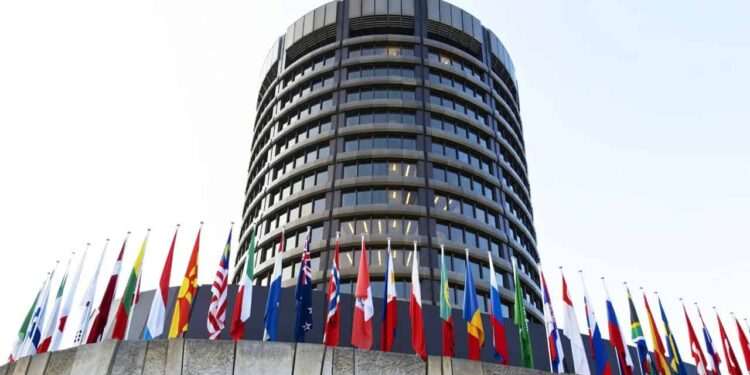
The Bank for International Settlements (BIS) has recently published a comprehensive 38-page research report, highlighting a significant shift within the global cryptocurrency landscape. The report reveals that major crypto exchanges are rapidly evolving into “Multifunction Crypto-asset Intermediaries” (MCIs). These entities consolidate a wide array of functions—including trading platforms, custody services, proprietary trading, brokerage, and token issuance—all under a singular corporate umbrella.
As an institution owned by 63 central banks worldwide, the BIS underscores a critical concern: this integrated operational model directly contravenes the fundamental principles of risk segregation inherent in traditional financial markets. In conventional finance, strict firewalls and the separation of roles into distinct, independent entities are mandated to mitigate conflicts of interest and prevent systemic risk contagion.
However, crypto exchanges predominantly embrace a vertically integrated structure, inextricably linking customer assets with the platform’s own operational vulnerabilities. This model suffers from a profound lack of operational transparency and is devoid of stringent reserve requirements or mandated asset segregation. Consequently, these platforms effectively function as “shadow banks,” operating with minimal regulatory oversight and heightened systemic risk.
The Perilous Truth Behind High Yields: User Assets as Unsecured Loans
Many prominent crypto exchanges are aggressively promoting “Earn” programs and other high-yield investment products to retail users, positioning them as effortless avenues for passive income.
However, the BIS report unequivocally asserts that these wealth management offerings are, at their core, unsecured loans provided directly to the platform. When users deposit crypto assets in pursuit of attractive returns, the platforms frequently engage in “rehypothecation”—a practice where these assets are repeatedly pledged and redeployed into high-risk ventures. These activities commonly include margin lending, highly leveraged proprietary trading, and the provision of market liquidity.
This mechanism often leads users to inadvertently surrender legal ownership or effective control over their deposited assets. In the event of a platform’s solvency crisis, users are directly exposed to the primary entity’s debt repayment risks, relegating them to the position of unsecured creditors at the tail end of any liquidation process.
Crucially, unlike regulated traditional bank deposits, these crypto assets are devoid of any deposit insurance protection and lack the critical backstop of a central bank acting as a lender of last resort. This continuous deployment of customer assets into speculative, high-risk endeavors injects profound instability into the entire digital asset ecosystem.
Lessons from the FTX Collapse and the $19 Billion Flash Crash
A significant cryptocurrency flash crash event, such as the one observed in October 2025, vividly illustrates the destructive potential of leveraged feedback loops. Within a mere 24 hours, macroeconomic shocks triggered a staggering $19 billion in forced liquidations across the network. Bitcoin’s value plummeted over 14% in a single day, leading to the liquidation of approximately 1.6 million traders and wiping out $350 billion from the total crypto market capitalization.
The BIS report specifically highlights the catastrophic failures of Celsius Network and FTX as stark cautionary tales—failures rooted in excessive leverage, opaque promises, and woefully inadequate risk management. The report points out that the crypto ecosystem’s heavy reliance on automated liquidation engines, coupled with trading depth concentrated among a handful of dominant platforms, creates a precarious environment.
When market confidence erodes, this structural vulnerability can ignite severe chain reactions. Moreover, as the crypto market’s interconnections with traditional banks and stablecoin issuers grow, the potential failure of this burgeoning “shadow banking” system poses a grave threat of significant spillover effects into the broader traditional financial sector.
Regulatory Lags and Cyber Exploits: Decentralized Finance’s Contagion Pathways
The profound integration between the broader crypto market and Decentralized Finance (DeFi) further amplifies the potential for systemic risk contagion. A recent and pertinent illustration is the KelpDAO protocol attack. Exploiting a critical vulnerability, attackers illicitly minted approximately 116,500 $rsETH. These fraudulently obtained tokens were then used as collateral to borrow substantial assets from prominent lending platforms such as Aave, culminating in a staggering capital shortfall of around $292 million.
- Related News: DeFi Shockwave: Kelp DAO Cross-chain Bridge Hacked, Nearly $300 Million Lost, Affecting Multiple Lending Protocols
Such incidents starkly demonstrate how a single protocol’s vulnerability can cascade into a widespread liquidity crisis across an entire ecosystem. Security analyses have linked this particular attack to North Korea’s notorious Lazarus Group, revealing that the hackers laundered 75,700 Ethereum into Bitcoin within a mere 1.5 days, generating approximately $910,000 in transaction fee revenue for the THORChain platform.
In response to these escalating complexities, the BIS advocates for a dual-pronged regulatory approach, encompassing both “entity-based” and “activity-based” regulation. However, regulatory bodies worldwide continue to grapple with significant hurdles, including outdated legal frameworks, formidable challenges in cross-border collaboration, and constrained supervisory resources. Without the diligent implementation of effective prudential supervision and robust international oversight, the inherent, hidden risks within the crypto market will persist in posing a substantial threat to global financial stability.
(The above content is an authorized excerpt and reproduction from our partner CryptoCity. Original Link)
Disclaimer: This article is provided for market information purposes only. All content and views expressed are for reference and informational purposes, and do not constitute investment advice. They do not represent the views or positions of BlockTempo. Investors are solely responsible for their own decisions and transactions. Neither the author nor BlockTempo will assume any responsibility for direct or indirect losses incurred by investors’ trading activities.