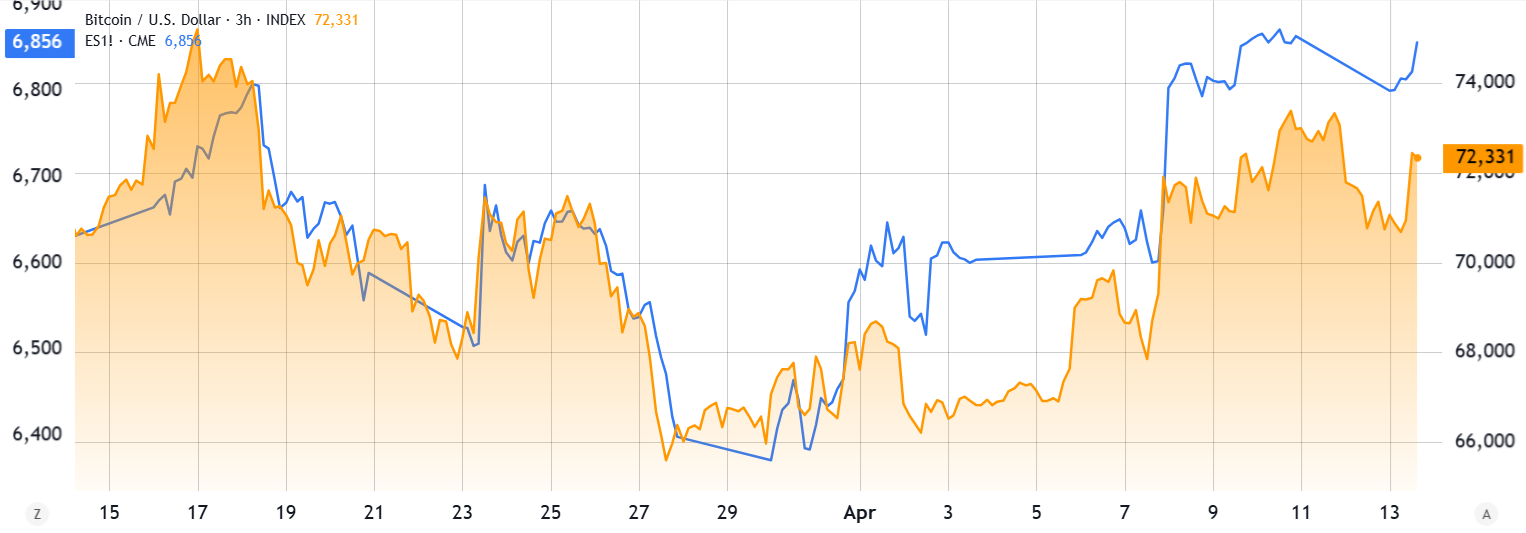
Following U.S. President Donald Trump’s order to blockade the Strait of Hormuz, the S&P 500 index saw a modest uptick, propelling Bitcoin back above the crucial $74,000 threshold. A surge in capital inflows into Bitcoin spot ETFs, coupled with MicroStrategy’s (NASDAQ: MSTR) continued aggressive accumulation, has steadily rekindled market confidence. However, does this recent resurgence truly signal the end of the “bear market”?
Data reveals a significant shift in sentiment, with U.S. Bitcoin spot ETFs attracting a substantial $615 million in net inflows between last Thursday and Friday, effectively reversing the outflows observed in the preceding two days. Concurrently, MicroStrategy announced a formidable $1 billion investment to acquire an additional 13,927 Bitcoins over the past week.
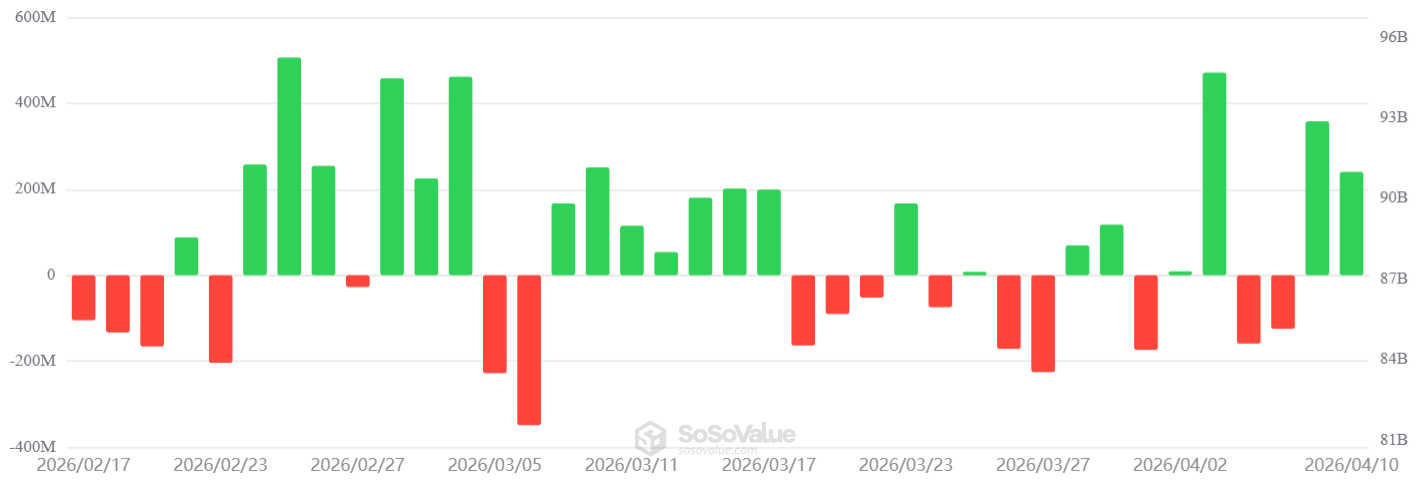
Despite the growing institutional appetite, Bitcoin’s trajectory remains closely intertwined with the S&P 500 index and the broader U.S. macroeconomic landscape. Over the weekend, the cryptocurrency briefly dipped to $70,500, impacted by the breakdown of U.S.-Iran ceasefire negotiations. Fortunately, Brent crude oil’s retreat to $99 per barrel on Monday helped alleviate market risk aversion, creating an upward pathway for risk assets like Bitcoin.
Futures Market Signals Caution: Limited Appetite for Aggressive Longs
While Bitcoin has demonstrated remarkable resilience around the $74,000 mark, the derivatives market has yet to fully embrace a bullish stance. The annualized premium for Bitcoin monthly futures, which reflects the extent to which futures prices exceed spot prices, stands at a mere 2%. This figure is notably below the neutral range of 4% to 8%, indicating a subdued willingness among traders to employ high leverage for long positions.
Furthermore, despite its recent impressive performance, Bitcoin remains down 18% year-to-date, contrasting with the relatively stable performance of the S&P 500 index over the same period. This disparity underscores Bitcoin’s inherent volatility and the cautious sentiment still present in the derivatives space.
Regulatory Clarity: The Next Catalyst for Bitcoin’s Ascent?
The sharp correction Bitcoin experienced at the end of January has sparked numerous theories, but the slow pace of cryptocurrency regulatory legislation in the U.S. Congress is undoubtedly a contributing factor. In response, U.S. Senator Cynthia Lummis is actively advocating for the passage of the “CLARITY Act,” a crucial bill designed to establish a comprehensive market structure for cryptocurrencies.
This legislation aims to provide clear operational guidelines for stablecoin issuers and define the essential criteria for a token to be classified as “decentralized.” The CLARITY Act is currently undergoing critical review within the Senate Banking Committee. However, some prominent exchanges have voiced concerns, particularly regarding recently added restrictive clauses pertaining to Decentralized Finance (DeFi) and the continued ambiguity surrounding the scope of tokenized assets.
Adding another layer of complexity, USD stablecoins observed a 0.4% discount against the official USD to RMB exchange rate on Monday. In the crypto market, such a discount typically signals an urgent rush for funds to exit and liquidate positions. Under balanced market conditions, stablecoins usually trade at a premium of 0.5% to 1.5%, reflecting traditional foreign exchange remittance costs and the regulatory friction arising from China’s capital controls.
Miner Sell-offs and Macroeconomic Headwinds: Obstacles on the Path to $80,000
Considering Bitcoin’s strong correlation with traditional financial markets and the lukewarm data from derivatives, it may be premature to declare the end of the bear market based solely on ETF inflows and the accumulation by a few corporate entities. Compounding this cautious outlook, publicly traded mining companies have recently been capitalizing on higher prices to significantly offload their Bitcoin holdings.
On-chain data confirms this trend, showing that over the past 30 days, major Bitcoin mining entities have made substantial sales: MARA Holdings (NASDAQ: MARA) divested 15,133 Bitcoins, Riot Platforms (NASDAQ: RIOT) reduced its holdings by 2,325 Bitcoins, and Cango (NYSE: CANG) sold 2,000 Bitcoins.
Looking ahead, Bitcoin’s ability to break through the formidable $80,000 barrier will largely hinge on an increased global preference for risk assets. However, in the short term, the evolving dynamics of the U.S.-Iran conflict are poised to remain the most critical variable influencing the cryptocurrency market’s volatility.
Disclaimer: This article provides market information only. All content and views are for reference purposes and do not constitute investment advice. They do not represent the views or positions of BlockTempo. Investors should make their own decisions and trades. The author and BlockTempo will not be held responsible for any direct or indirect losses incurred by investors’ transactions.