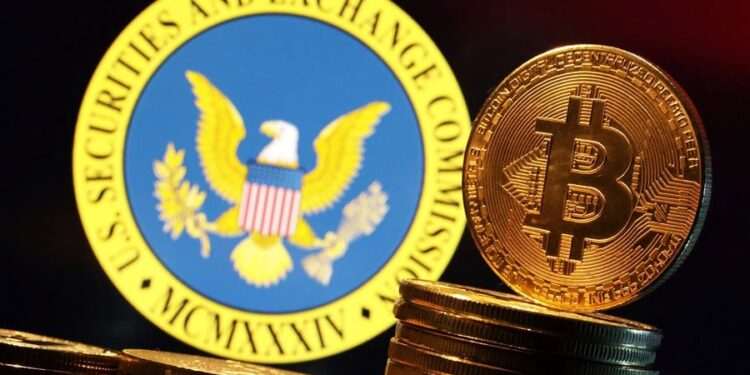
SEC Issues Conditional Exemption for Crypto Wallet User Interfaces from Broker-Dealer Registration
In a significant development for the digital asset space, the U.S. Securities and Exchange Commission (SEC) announced on Monday that certain “user interfaces (UIs)” facilitating crypto wallet operations and transactions may be exempt from registering as “broker-dealers.” This move signals a nuanced approach to regulating the rapidly evolving cryptocurrency landscape.
Understanding the SEC Staff Statement
The SEC’s Division of Trading and Markets released a staff statement on Monday, offering clarity on the application of federal securities laws to crypto asset-related user interfaces. Crucially, the SEC emphasized that this document serves as an interim policy perspective, not a formal rule or legally binding regulatory guidance. The Commission stated:

“This statement aims to clarify how federal securities laws apply to activities related to ‘crypto asset securities.’ As the Commission continues to deliberate various regulatory issues related to crypto asset securities activities and compiles external feedback during this transitional period, the staff’s views will serve as an interim policy perspective.”
Defining the Exempted User Interfaces
The SEC clarified that these “user interfaces (UIs)” encompass a range of tools, including websites, software applications, and browser extensions. They are typically integrated into crypto wallets or provided for users to download, enabling individuals to leverage “self-custodial wallets” for “user-initiated crypto asset securities transactions” on blockchain protocols. Essentially, these UIs act as conduits, connecting users directly to the blockchain without intermediaries handling their assets.
Key Conditions for Exemption
For a crypto wallet interface to qualify for this critical exemption from broker-dealer registration, the SEC outlined several stringent conditions:
- No Investor Solicitation: The UI must not actively solicit investors or promote specific investment opportunities.
- Neutrality in Trading: It must refrain from using promotional language, such as “best price,” that could influence users’ trading decisions or dictate execution paths.
- Robust Internal Policies: The UI provider must establish comprehensive internal policies and procedures designed to objectively and systematically analyze the status of various trading platforms, ensuring impartiality.
This framework emphasizes that the UI’s role should remain purely technical and facilitative, empowering users to execute their own decisions without external influence or intermediation.
When Exemption is Lost: Crossing the Line
The SEC made it clear that any UI crossing the boundary from a pure software service to a more active role in trading will immediately forfeit its exempt status. This includes activities such as:
- Offering financing or lending services to users.
- Providing investment advice or recommendations.
- Substantially handling or taking custody of user assets.
- Actively accepting or executing trades on behalf of users.
Should a UI engage in any of these actions, it will fall back under the SEC’s jurisdiction, requiring broker-dealer registration and adherence to associated regulations.
A Shifting Regulatory Paradigm
This latest staff statement from the SEC aligns with a discernible shift in its regulatory approach over the past year. Moving away from former Chairman Gary Gensler’s broad stance that “most crypto assets are securities,” the Commission is increasingly adopting a “functional classification” model. Through a series of recent statements, the SEC has begun to dissect and categorize different types of cryptocurrency activities—from meme coins and stablecoins to staking mechanisms and now user interfaces. This evolving regulatory logic suggests a more granular and tailored approach to digital asset oversight, aiming for precision rather than a blanket application of existing rules.
Disclaimer: This article is for informational purposes only and provides market insights. All content and views are for reference only, do not constitute investment advice, and do not represent the views or positions of Blockcast. Investors should make their own decisions and conduct their own transactions. The author and Blockcast shall not be liable for any direct or indirect losses incurred by investors’ transactions.