Taiwan’s Digital Leap: Forging the Future of Virtual Assets and Blockchain
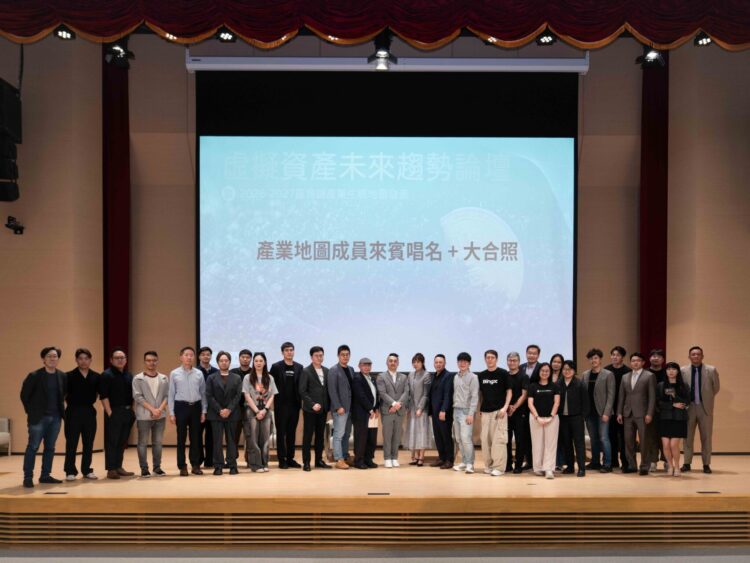
As the global virtual asset market experiences rapid expansion, a structural transformation is underway within the international financial system. Taiwan, transitioning from a phase of cautious observation and initial trials, is now officially embracing a new era of legal framework development and robust industry integration. This pivotal shift was prominently highlighted at the annual forum hosted by the Bitcoin and Virtual Asset Development Association, held on May 7, 2026, at the International Conference Hall of NCCU Public & Business Center.
The event convened nearly 200 influential representatives from diverse sectors, including industry leaders, regulatory bodies, financial institutions, technology innovators, and investment firms. Discussions intently focused on critical areas such as Taiwan’s proposed Virtual Asset Service Act, the evolving landscape of stablecoins, the future of digital payments, strategies for institutional adoption, and overarching global market trends. The forum underscored a monumental moment, signaling Taiwan’s blockchain industry’s decisive move into its next stage of maturity and influence.
Laying the Regulatory Foundation: The Virtual Asset Service Act
In their opening remarks, Legislators Li Kun-cheng and Ge Ru-jun emphasized the profound significance of the Virtual Asset Service Act (VASP Act) as a cornerstone for Taiwan’s digital financial evolution and a highly anticipated legislative priority for the year. They noted that while the Executive Yuan has presented its draft, various parliamentary caucuses and individual legislators have also put forth alternative versions, all pushing for expedited review, negotiation, and ultimate approval.
Both legislators underscored that robust legal frameworks transcend mere regulatory tools; they are fundamental to cultivating market trust. By establishing clear and unambiguous rules, Taiwan aims to dismantle the historical negative associations of virtual assets with fraud, money laundering, and speculation. This clarity will not only empower compliant operators with a defined operational path but also instill greater confidence in the public and traditional financial institutions to participate securely in this burgeoning financial landscape.
The New Horizon for Stablecoins and Digital Payments in Taiwan
A compelling panel titled “The New Future of Taiwan Stablecoins and Digital Payments” brought together leading representatives from Taiwan’s VASP industry, including Owlting, HOYA BIT, MaiCoin, and ZONE Wallet. The discussion centered on the transformative potential of stablecoins across various applications: enhancing cross-border payments, streamlining corporate settlements, facilitating merchant transactions, and integrating into digital wallets.
Panelists highlighted how stablecoins can drastically reduce foreign exchange costs, accelerate settlement times, and overcome the inherent limitations of traditional finance in global value transfer. They envisioned a future where a TWD stablecoin, integrated within a comprehensive regulatory framework, supported by banking partnerships, powered by on-chain settlement, and embedded in local payment scenarios, could emerge as a pivotal interface for financial innovation in Taiwan. Such an advancement would not only boost corporate capital deployment efficiency but also broaden the scope of digital payments from consumer-centric uses to widespread commercial applications.
Navigating Global Trends and Market Evolution
The “Global Trends” panel featured international exchange representatives from Binance and BingX, offering insights into the next wave of virtual asset developments from an Asia-Pacific and global vantage point. Panelists affirmed Asia-Pacific’s status as one of the most dynamic virtual asset markets worldwide, noting Taiwan’s high investor participation. They asserted that the successful implementation of the VASP Act would significantly enhance market clarity and bolster the willingness of international exchanges to expand their presence in Taiwan.
A crucial observation was the global shift in regulatory philosophy: from a primary focus on preventing illicit activities to a more progressive emphasis on compliant development and robust industry governance. While jurisdictional differences in regulatory frameworks persist, the overarching trajectory is towards greater consistency and maturity. The market structure itself is also evolving, moving away from a heavy reliance on short-term retail trading towards long-term institutional allocations, ETFs, OTC services, sophisticated custody solutions, and compliant financial products. This shift necessitates increased collaboration between exchanges, banks, custody providers, and technology service providers as traditional financial institutions and corporate clients increasingly explore virtual asset services. While USD-denominated stablecoins currently dominate, panelists suggested that non-USD stablecoins, if strategically integrated with local payment systems, asset tokenization, corporate settlements, and digital sovereignty initiatives, could carve out distinct and valuable market niches.
Unveiling the “2026-2027 Taiwan Blockchain Industry Ecosystem Map”
A major highlight of the forum was the official launch of the “2026-2027 Taiwan Blockchain Industry Ecosystem Map.” This comprehensive map, the culmination of an extensive survey of over 100 ecosystem participants across Taiwan, graphically illustrates the industry’s evolution. It encompasses diverse sectors including exchanges, payment solutions, wallets, custody services, financial services, technical solutions, enterprise applications, and foundational infrastructure.
Chairperson Hsu Pei-ling of the organizing association articulated that this map is more than an internal guide for industry collaboration; it serves as a powerful “business card” for the international market. Its purpose is to provide overseas institutions, investors, and policy observers with a clear and holistic view of the immense potential and integrated strength of Taiwan’s Web3 and virtual asset industry.
A Unified Vision from Industry Leaders
The “Taiwan Blockchain Industry Trends – Looking Ahead” session brought together the heads of Taiwan’s five leading blockchain and virtual asset associations, who collectively charted new milestones for industry growth:
- Chang Sen-hsiung, Secretary-General of the Virtual Currency Association (VASP Association), underscored the association’s vital role as a self-regulatory body and a critical bridge for communication between industry and government during the VASP Act’s review process.
- Kao Chi-chun, Chairman of the Blockchain Enthusiasts Association, championed the breaking down of industry silos, advocating for cross-sector collaboration and ecological development with a “shepherd dog” spirit.
- Cheng Hsueh-feng, Secretary-General of the FinTech Association, focused on the special law review and cross-border alliance cooperation within the Asia-Pacific region, expressing optimism about stablecoins’ pivotal role.
- Chien Shu-yung, Chairman of the Virtual Asset Anti-Money Laundering Association, reiterated his commitment to “demystifying” the industry through regulatory education and enhancing transparency via the implementation of the “Travel Rule.”
- Peng Shao-fu, Chairman of the Blockchain University Alliance, shared achievements in academic and industry-academia collaboration, emphasizing talent cultivation as the bedrock for stable industry development.
A strong consensus emerged among these leaders: through concerted efforts in legalization, internationalization, and educational outreach, Taiwan’s blockchain industry is poised to enter a healthier and more sustainable phase of development.
KPMG’s Strategic Outlook: Trust, Liquidity, and Integration
KPMG’s special presentation, “Taiwan Virtual Asset and Blockchain Industry Review and Outlook,” provided a historical context, tracing Taiwan’s journey from early innovation and operator registration to the establishment of associations and the advancement of custody, stablecoins, and specialized legislation. KPMG highlighted blockchain’s core value in enabling funds and assets to operate in a 24/7, “Always On” liquidity mode, thereby boosting financial efficiency and fostering novel business models.
In light of accelerated efforts in markets like Japan, Hong Kong, and Singapore, KPMG advised Taiwan to build upon a foundation of “trust finance.” This involves synergizing the compliance expertise and customer bases of financial institutions with the technical prowess of blockchain operators, all within the context of real-world commercial applications. This integrated approach is crucial for completing the puzzle of liquidity, settlement, and compliance necessary for Taiwan to compete effectively on the global stage.
Bridging Traditional Finance and Web3
The forum also facilitated crucial dialogues between traditional finance, telecom, and international custody representatives, including Taishin Financial Holdings, Taiwan Mobile, BitGo, and CTBC Group. These discussions explored the burgeoning opportunities for traditional finance to seamlessly integrate with Web3 technologies. From enterprise adoption and virtual asset custody to payment applications and enhanced financial services, a shared conviction emerged:
For Taiwan to secure a leading position in the next wave of digital financial competition, it must move beyond mere regulatory compliance. The imperative is to establish implementable infrastructure, foster robust cross-industry collaboration models, and develop internationally recognized mechanisms. These steps are essential to ensure that local operators can effectively connect with and thrive in the global market.
Taiwan’s Ascendant Role in Asia-Pacific’s Digital Future
The organizers concluded that the launch of the “2026-2027 Taiwan Blockchain Industry Ecosystem Map” signifies a profound shift: Taiwan’s virtual asset industry has transitioned from fragmented early exploration to a new stage defined by integration, collaboration, and internationalization. As the regulatory framework gains clarity, the industry value chain becomes more complete, and financial and technology sectors deepen their cooperation, Taiwan is no longer simply chasing the global virtual asset wave. Instead, it is poised to emerge as a significant and influential participant in the development of Asia-Pacific’s new financial infrastructure.
Disclaimer: This article is provided for market information purposes only. All content and views are for reference only and do not constitute investment advice. They do not represent the views and positions of BlockTempo. Investors should make their own decisions and trades. The author and BlockTempo will not bear any responsibility for direct or indirect losses resulting from investor transactions.