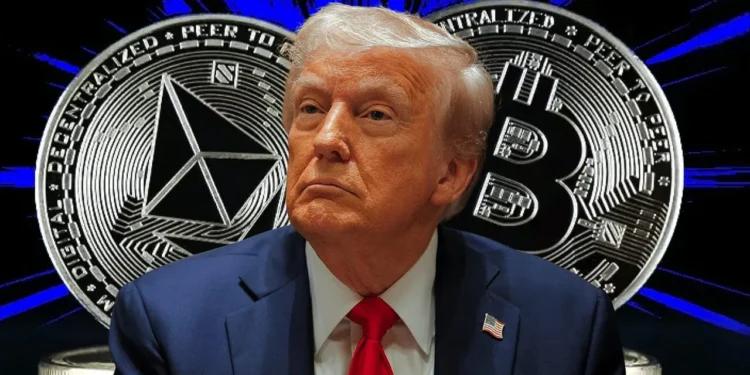
US Crypto Regulation Nears Breakthrough: Trump Agrees to Key Ethics Provision in CLARITY Act
Significant strides have been made in the landscape of U.S. cryptocurrency regulation. President Donald Trump has reportedly agreed to incorporate a contentious “ethics provision” into the Digital Asset Market Clarity Act (CLARITY Act), effectively removing a major legislative hurdle. This pivotal development brings the CLARITY Act, which aims to establish a comprehensive regulatory framework for digital assets in the United States, closer to a crucial vote in the Senate.
Sources familiar with the matter, speaking to *The Block*, revealed that months of intensive, “marathon” negotiations have finally yielded consensus on the ethics clause. “Our latest information is that Trump has accepted this provision,” an insider stated.
The news was initially broken by Eleanor Terrett of *Crypto in America* and Brendan Pedersen of *Punchbowl News*. However, Pedersen noted that the Democratic caucus has yet to review the final text of the agreed-upon provision.
This breakthrough follows a closed-door meeting on July 16, where President Trump discussed the provision with Republican Senators Bernie Moreno and Cynthia Lummis, alongside White House crypto advisor Patrick Witt. While no agreement was reached at that time, Trump ultimately signed off on the clause Monday evening. As of now, the White House and the offices of the two senators have not issued official comments.
Unlocking Progress: The CLARITY Act and its Ethical Core
The CLARITY Act is poised to be a landmark piece of legislation, designed to establish the first comprehensive federal-level regulatory system for cryptocurrencies. It seeks to clearly define the oversight responsibilities of the U.S. Securities and Exchange Commission (SEC) and the U.S. Commodity Futures Trading Commission (CFTC), making it arguably the most critical regulatory bill for the American crypto industry. The “ethics provision” has consistently been the primary sticking point hindering its advancement.
According to *Politico*, some Democrats had expressed reservations about the ethics clause presented to the President prior to last week’s meeting. For over a year, Congress and the White House have debated this provision, whose central aim is to prevent conflicts of interest by strictly limiting the ability of presidents, vice presidents, members of Congress, and other high-ranking federal officials to profit from digital assets while in office.
At the heart of this conflict-of-interest debate lies Trump’s issuance of a meme coin and his family’s involvement in the DeFi project, World Liberty Financial (WLF). Financial disclosures last month revealed that Trump earned millions of dollars from WLF-related activities, sparking intense political discussion about the necessity of robust ethical guidelines.
Urgency in the Senate: A Race Against Time
Looking ahead, the full text of the CLARITY Act is expected to be released in the coming days, paving the way for a full Senate vote. Given the limited congressional calendar, the Senate must complete this vote by the first week of August. Should it pass successfully, the bill would then return to the House of Representatives for review before finally being sent to President Trump for his signature to become law.
Another source close to the negotiations indicated that while the bill’s text could be released as early as Monday evening, a delay of a few days is also possible. This source suggested that a later release might signify more extensive ongoing bipartisan negotiations, potentially increasing the likelihood of the bill securing broad cross-party support.
Adding to the legislative drama, Patrick Witt, the White House crypto policy advisor spearheading these negotiations, was originally scheduled to depart this week for mandatory training with the Georgia Army National Guard. However, he announced on X on Monday that his training has been postponed, confirming his continued presence to oversee the bill’s critical progress.
Disclaimer: This article is for market information purposes only. All content and views are for reference only, do not constitute investment advice, and do not represent the views and positions of BlockBeats. Investors should make their own decisions and trades. The author and BlockBeats will not bear any responsibility for direct or indirect losses resulting from investor transactions.