By Nancy, PANews
Crypto Exchanges Open a Gateway to US Stocks: Reshaping Markets and Cultures
A new, highly accessible window into US stock trading is rapidly being unveiled by Centralized Exchanges (CEXs). As major crypto platforms venture aggressively into the traditional stock market, seeking new avenues for growth and capital, the ripple effects are poised to reshape market liquidity and asset allocation strategies. This unprecedented convergence also promises to infuse the crypto world’s dynamic capital flows, rapid trading rhythms, and innovative culture into conventional financial assets.
Wall Street’s Fringe Stocks Become the New “Meme Coins”
With US stocks now accessible within the crypto ecosystem, traders accustomed to the high volatility and short-term plays of digital assets are applying their familiar strategies directly. The launch of US stock trading on June 1st by Binance, the world’s largest crypto exchange, immediately highlighted this trend. Contrary to expectations, the most active trading wasn’t concentrated in blue-chip stocks, but rather in a multitude of lesser-known small-cap, micro-cap, and even nano-cap equities.
Stocks such as WOK, ZCMD, ANY, and ABTS, for instance, each saw single-day trading volumes exceed $100 million, quickly becoming hot commodities on Binance’s US stock section. These peripheral assets, long overlooked by mainstream investors, suddenly found themselves the focus of intense crypto capital. For many crypto participants, these low-market-cap stocks bear a striking resemblance to meme coins: small float, high price elasticity, and a propensity to attract significant market attention. The belief is that sufficient interest and capital can lead to a “lottery win.” However, this speculative approach often encounters harsh realities in the US stock market.
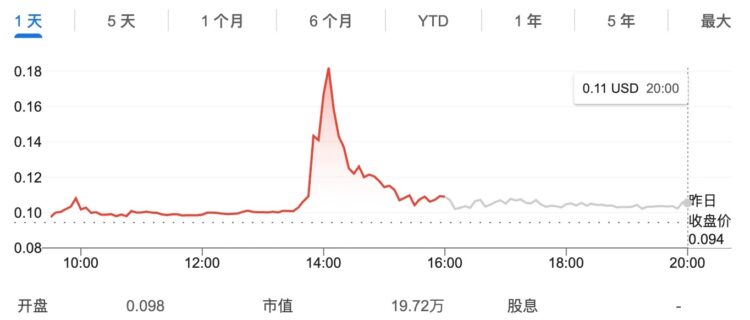
Consider Wokai Medical (WOK), a Chinese concept stock and a quintessential nano-cap with a market capitalization under $200,000. It previously received a Nasdaq delisting warning due to its prolonged sub-$1 share price. Despite repeated reverse stock splits to maintain its listing, fundamental pressures persisted. Yet, on June 1st, following Binance’s US stock launch, WOK unexpectedly surged to become one of the platform’s highest-volume stocks, with single-day trading volume nearing $400 million.
The influx of crypto capital was so significant that some traders lightheartedly claimed they were “about to become major shareholders.” However, the euphoria was short-lived. After a brief spike, WOK’s stock price rapidly retreated. The underlying reason: WOK possesses substantial “ammunition” for dilution. The company has long held the ability to issue new shares at market price through shareholder meeting approvals for capital expansion and existing SEC shelf registrations, effectively diluting existing holdings.
Similarly, Zhongchao Medical (ZCMD), another highly speculative micro-cap shell stock, also possesses near-infinite issuance capacity. This is enabled by massive authorized capital expansion approved by shareholder meetings, an active F-3 shelf registration, and board-authorized mechanisms for multiple reverse stock splits.
For crypto investors unfamiliar with the intricate rules of US stock capital operations, these scenarios highlight the ease with which one can become liquidity fuel for the market.
The Crypto Invasion of US Stocks: Heightened Risks and Cultural Clashes
CEXs’ expansion into the US stock market introduces an unprecedented asset pool for crypto users. However, a larger pool often implies deeper waters and more complex risks.
From a risk perspective, the US stock market is stratified into distinct tiers. At the apex are the Nasdaq and NYSE main boards, home to most mature publicly traded companies. These firms adhere to stringent requirements for market capitalization, revenue, profit, or cash flow, and are subject to dual oversight from the SEC and the exchanges. Information disclosure is robust, institutional investor participation is high, and significant share issuances typically require shareholder approval, ensuring superior market transparency and governance.
The middle tier comprises nano-cap and ultra-small-cap stocks, with market capitalizations often below tens of millions of dollars. While still listed on main boards, many of these companies face persistent delisting risks. When share prices consistently fall below standards, they often enter a remediation period, frequently exhibiting “dead cat bounces” or “pump and dump” schemes before delisting.
The highest risk category is the OTC Pink Sheet market. Here, listing thresholds are minimal, information disclosure requirements are limited, and liquidity is often scarce. Market maker influence is substantial, making stock manipulation and shell company speculation common occurrences.
The lowest tier, the OTC Pink Sheet over-the-counter market, boasts virtually zero listing barriers, no issuance restrictions, and lacks strict delisting mechanisms. This environment is rife with shell companies, severe market maker control, extremely poor information disclosure, and frequent manipulation amidst poor liquidity.
While the barrier to entry for US stock trading has significantly lowered, investors who fail to grasp the regulatory frameworks, financing mechanisms, and equity dilution rules governing these diverse market tiers are highly susceptible to pitfalls.
Conversely, the crypto community is undeniably injecting its unique trading philosophy into the US stock market. Traditional investors typically assess a company’s value based on revenue, profit, cash flow, and growth projections. In contrast, traders nurtured in the crypto market prioritize factors like circulating supply, market hype, community consensus, and price elasticity.
This fundamental divergence is beginning to alter the pricing dynamics of traditional assets. Notably, some previously overlooked fringe stocks are now attracting capital inflows and market attention that transcend their underlying fundamentals. To a certain extent, this represents more than just a merger of crypto and TradFi markets; it is a profound collision of two distinct financial market cultures.
From Stocks to Stablecoins: CEXs Chart a New Growth Trajectory
As traditional stock markets experience renewed vigor, crypto liquidity faces a potential drain. The increasing number of exchanges listing conventional financial assets like US stocks is likely to exert a “siphoning effect” on the crypto market in the short term. This capital reallocation from higher-risk crypto assets to more stable, established assets is a natural market phenomenon, especially during periods of subdued performance for Bitcoin, Ethereum, and most altcoins.
From the CEX perspective, venturing into the US stock market extends far beyond merely adding a new trading product. As one of the world’s largest asset pools, US stocks command immense capital, mature liquidity, and widespread attention. For exchanges, listing these assets is fundamentally a strategic move to attract users, enhance fund retention, and secure a gateway to global capital flows, particularly in an environment of slowing industry growth and intensifying competition.
In the short run, this might not appear to be an immediately “sexy” business proposition. CEX revenues in recent years have largely depended on high volatility, rapid turnover, and leveraged trading. Traditional financial investors, however, typically favor long-term holdings, low-frequency trading, and strategic asset allocation. Even if a significant number of users begin trading US stocks via crypto exchanges, replicating the explosive growth curves seen during crypto bull runs will be challenging.
The true long-term potential lies in CEXs’ ability to convert TradFi users and expand their ecosystems. When traditional financial users first open an account on a crypto platform and use stablecoins to purchase US stocks, their initial migration cost is substantially reduced. This initial interaction can serve as a stepping stone: from buying stocks, to holding stablecoins, then engaging with other crypto assets, participating in decentralized finance (DeFi) products, or exploring on-chain applications. Exchanges can progressively guide this new demographic into becoming full-fledged crypto users.
To retain this influx of capital, exchanges are also poised to innovate around US stock assets. Binance’s planned “bStocks,” for instance, aims to transform traditional equities into programmable, on-chain assets. This would allow users to leverage them as collateral for lending, contribute them to liquidity pools for yield, integrate them into structured products, or even develop novel derivative strategies. Such innovations not only significantly boost user stickiness for exchanges but also unlock entirely new revenue streams for the platform.
In essence, the collective embrace of the US stock market by CEXs marks a pivotal and transformative turning point in the ongoing evolution of the crypto industry.
(The above content is an excerpt and reproduction authorized by partner PANews. Original Article Link)
Disclaimer: This article is provided for market information purposes only. All content and views are for reference only, do not constitute investment advice, and do not represent the views or positions of the author or PANews. Investors should exercise their own judgment and make independent trading decisions. The author and PANews will not bear any responsibility for direct or indirect losses resulting from investor trades.