

Mysterious $1.29 Billion BlackRock Bitcoin ETF “Dark Pool” Dump Rocks Crypto Market
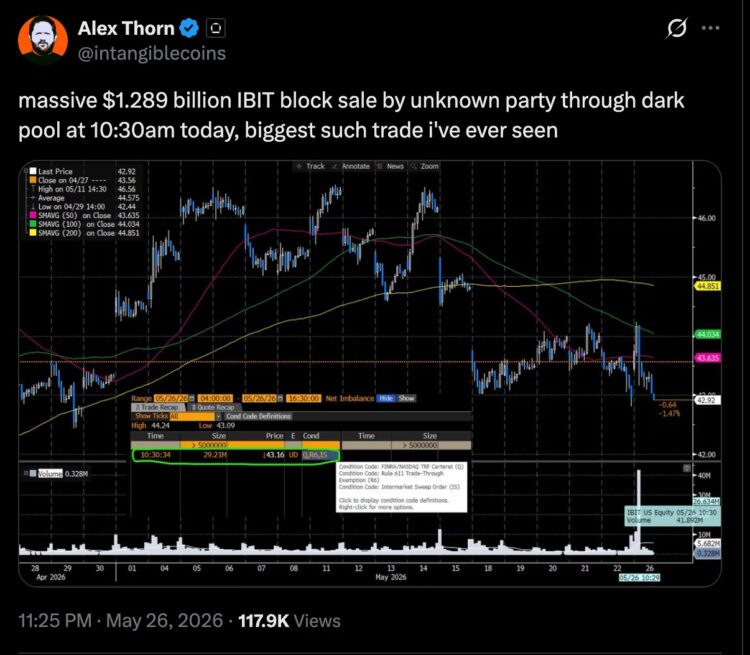
Amidst a significant capital exodus from U.S. spot Bitcoin Exchange-Traded Funds (ETFs), an enigmatic transaction has sent shockwaves through Wall Street and the crypto community. A colossal “whale” investor executed a massive dump of BlackRock’s iShares Bitcoin Trust (IBIT), offloading a staggering $1.29 billion worth of shares in a “dark pool.” This unprecedented sale, the largest since IBIT’s inception, has triggered alarms, prompting urgent questions about the identity of the seller and their motives for such an aggressive exit.
Understanding Dark Pool Trading: The Institutional Secret
For those unfamiliar, “dark pool trading” refers to an off-exchange mechanism where institutional investors privately match large buy and sell orders. This allows major players – such as hedge funds, investment banks, and institutional investors – to execute substantial trades without immediately impacting public market prices or creating panic among retail investors. It’s a method designed for discreet position adjustments, preventing sudden price crashes that could arise from publicly executing multi-billion dollar orders.
However, even within the shadows of dark pools, a single sell order exceeding $1 billion is a rare and potent signal, often interpreted as a significant decline in risk appetite among sophisticated investors.
Context: Widespread Bitcoin ETF Outflows Intensify
This colossal dark pool transaction unfolded against a backdrop of escalating outflows from U.S. spot Bitcoin ETFs. On the day of the sale, the 11 U.S. Bitcoin ETFs collectively registered a net outflow of $334 million. This marked the seventh consecutive trading day of capital withdrawal, establishing the second-longest streak of sustained “bleeding” since these groundbreaking funds launched.
Alex Thorn, Head of Research at prominent crypto investment bank Galaxy, highlighted the sheer scale of the event on social media platform X, stating, “This $1.289 billion IBIT dark pool trade is the largest of its kind I’ve ever seen,” noting it occurred at 10:30 AM ET.
Interpreting the Signal: A Warning from the Whales?
In financial markets, a sudden divestment of over $1 billion by a single entity is typically viewed as a cautionary flag. It suggests deep-seated concerns about the market’s future trajectory and an urgent desire by the institution to de-risk and reduce its exposure to the asset class.
It’s crucial to note, however, that a dark pool transaction doesn’t necessarily equate to a complete withdrawal of funds from the broader market. While it undeniably signifies a seller’s intent to cash out, the nature of dark pools means there could also be institutional buyers quietly absorbing this massive selling pressure. The “net outflow” figures reported for the ETFs represent the final balance after accounting for all buying and selling activity throughout the day, both on-exchange and in dark pools.
Capital Flight Accelerates: Bitcoin’s Price Under Pressure
Data from analytics platform SoSoValue confirms that BlackRock’s IBIT fund itself experienced a net outflow of $192 million on the day of the dark pool trade. This reinforces the narrative that sellers, eager to realize profits or cut losses, are currently dictating the market’s pace.
The intensifying trend of capital withdrawal is becoming increasingly difficult for Bitcoin bulls to ignore. Over the past two weeks alone, investors have pulled an alarming $2.26 billion from Bitcoin ETFs. Should this panic-driven exodus persist, Bitcoin’s crucial price support levels could face even more rigorous testing.
According to CoinGecko’s price data, Bitcoin has seen a steady retreat since peaking above $82,000 on May 6, now trading below $77,000, clearly exhibiting short-term bearish momentum. This significant reshuffling of long and short positions leaves the market at a crossroads: Is this a strategic “deep squat” before a powerful rebound, or merely the precursor to a more substantial market downturn? The crypto world watches with bated breath.
Disclaimer: This article is intended solely to provide market information. All content and views are for reference only, do not constitute investment advice, and do not represent the views and positions of the author or publisher. Investors should make their own decisions and trades. The author and publisher will not bear any responsibility for direct or indirect losses resulting from investor transactions.




