South Korea’s KOSPI Plunges into Bear Market as Leveraged Single-Stock ETFs Trigger Unprecedented Trust Crisis
By Jae, PANews
On July 8, the South Korean stock market continued its steep decline, with the Korea Composite Stock Price Index (KOSPI) briefly falling below 7,200 points, losing over 6% in a single day. This cumulative drop of more than 20% from its June peak officially pushed the KOSPI into a technical bear market.
Known for its high volatility and significant retail investor participation, the South Korean equity market has been engulfed in an unprecedented crisis of confidence, largely triggered by the introduction of leveraged exchange-traded funds (ETFs) tied to individual stocks.
Ahn Cheol-soo, a prominent member of the ruling People Power Party and former presidential candidate, publicly lamented on social media that the KOSPI had “completely devolved into a casino.” He vehemently called for robust corrective measures, including the potential delisting of 2x leveraged products linked to tech giants Samsung Electronics and SK Hynix.
In a mere six weeks, the South Korean market has traced a dramatic parabolic arc: from the initial widespread anticipation surrounding the regulatory exception for single-stock leveraged ETFs in late May, to the current chaotic scene of parliamentary delisting reviews and public apologies from regulators.
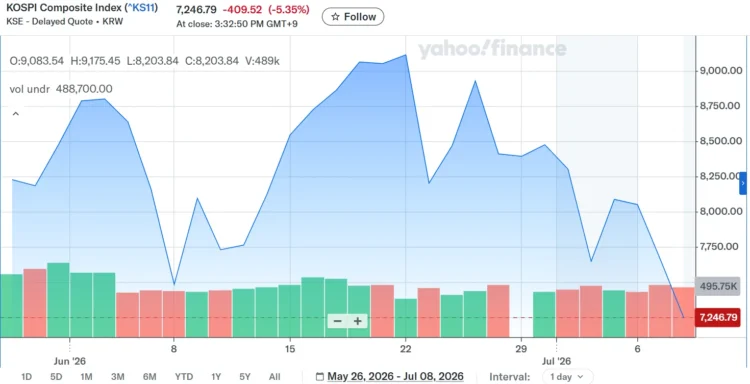
This unfolding financial drama has starkly exposed the deep-seated structural vulnerabilities of the Korean stock market, characterized by high concentration and rampant leverage. It also serves as an urgent warning bell for regulators globally grappling with leveraged products amidst a growing wave of retail investor participation.
Regulatory Deregulation: A Desperate Gambit Against Capital Flight
Rewind just two months, and the introduction of single-stock leveraged products in South Korea emerges as a defensive maneuver. Aggressive financial reforms are often born from institutional helplessness and anxiety.
For years, South Korean retail investors, frustrated by the domestic market’s prolonged stagnation, had been siphoning significant capital into overseas leveraged markets, particularly into leveraged and inverse ETFs listed in the U.S. and Hong Kong. Among these, CSOP Asset Management’s 2x leveraged SK Hynix product, issued in Hong Kong, became exceptionally popular. It quickly attracted a massive influx of Korean day-trading capital, with its assets under management (AUM) soaring past $13 billion, making it the world’s largest single-stock leveraged investment vehicle.
Faced with persistent capital outflow from the domestic market, mounting pressure on the Korean Won, and the undeniable demand from retail investors for leveraged products, the Korean financial supervisory authorities’ policy pendulum began to swing. On April 28, the Financial Supervisory Service (FSS) officially revised its long-standing “single-stock leverage ban.” This revision significantly increased the individual stock holding limit for index-linked products from 30% to 100% and removed the rigid threshold of requiring 10 component stocks. These changes effectively cleared the compliance hurdles for 2x leveraged and inverse products tied to major tech companies.
The timing was critical: the semiconductor industry was riding the crest of the Artificial Intelligence (AI) wave. Fueled by an explosion in AI computing demand and breakthroughs in High Bandwidth Memory (HBM) technology, both Samsung Electronics and SK Hynix were reporting record-breaking performance, pushing bullish market expectations to their peak.
On May 27, Korean financial authorities officially approved eight leading asset management firms to issue the first batch of 16 domestic 2x leveraged and inverse products linked to Samsung and SK Hynix.
To curb excessive speculation, regulators formally implemented several “firewalls”:
- Prohibiting the direct inclusion of the traditional “ETF” label in product names to differentiate them from diversified investment funds.
- Requiring investors to deposit a margin of 10 million Korean Won.
- Mandating completion of a 2-hour investor education course.
However, these seemingly protective measures proved to be flimsy barriers against the near-frenzied speculative fervor of retail investors, ultimately rendering them ineffective.
High Concentration and Leverage Backlash: Retail Investors Become Sacrifices to Daily Rebalancing
Ahn Cheol-soo highlighted a critical structural flaw: Samsung Electronics and SK Hynix collectively account for approximately 60% of the KOSPI’s total market capitalization. Layering leverage onto this “top-heavy” structure is akin to attaching an amplifier to the entire index, meaning even the slightest market tremor is magnified across the entire ecosystem.
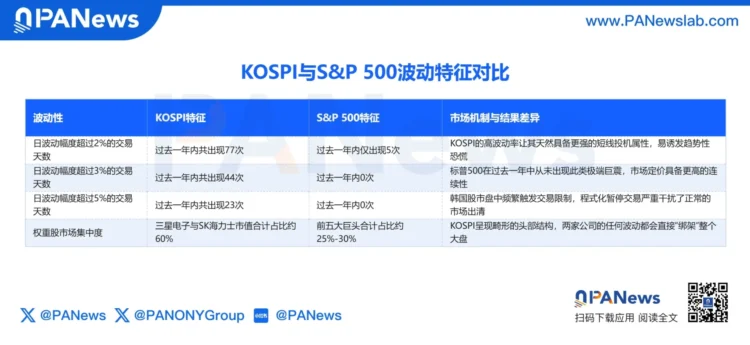
By early July, the capital flowing into Samsung Electronics and SK Hynix leveraged products had swelled to 212 trillion Korean Won, representing about 26.6% of South Korea’s total ETF trading volume. Yet, a month after their launch, all 14 leveraged products recorded negative returns, with the largest loss reaching 35.9%. On July 7, 13 of these products even fell below their 20,000 Won issue price. On that day alone, the combined trading volume of the 16 single-stock leveraged and inverse products reached 13.11 trillion Korean Won, exceeding one-third of the entire market’s ETF trading volume.
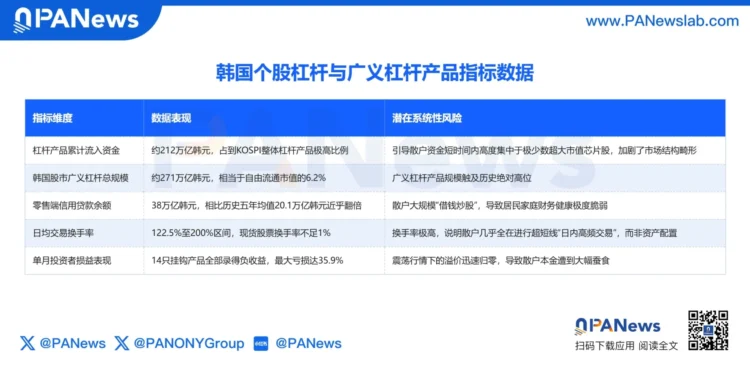
Even more perplexing was the performance of products like the KODEX Samsung Electronics Leveraged ETF. From its listing until July 3, despite Samsung Electronics stock itself rising by approximately 0.81%, the leveraged product declined by 10.75%. The underlying stock was gaining, but the leveraged product was losing money. This anomaly points to the “Daily Rebalancing” mechanism of leveraged products becoming a curse that systematically harvests retail investor capital.
To maintain their advertised 2x exposure, these leveraged products are programmed to adjust their positions at the close of each trading day: passively buying more when the underlying stock price rises and mechanically selling when it falls. In volatile or sideways markets, this mechanism creates a “negative compounding effect,” where the net asset value (NAV) steadily erodes due to rebalancing costs. As long as the underlying asset experiences wide fluctuations rather than a consistent upward trend, the NAV of leveraged products will continue to evaporate.
As of July 6, the total net assets of the 16 single-stock leveraged ETFs stood at approximately 14.91 trillion Korean Won, a 15.3% decrease from 17.6 trillion Korean Won on June 25, representing a shrinkage of roughly 3 trillion Korean Won.
The destructive power of these leveraged products extends beyond retail investor losses; it is actively distorting the entire market. Trading monitoring data from UBS and Barclays revealed that during market fluctuations in early March and mid-May, programmatic rebalancing flows in the final half-hour of trading accounted for as much as 60% and 17% of SK Hynix’s total spot trading volume, respectively.
The rebalancing actions of leveraged products significantly deviated from the underlying fundamentals, directly transforming into an irrational “tail wagging the dog” scenario of selling or buying. The KOSPI fear index surged to historical extremes of 90.8 to 95 in mid-June, indicating a market gripped by highly emotional trading. This year alone, the Korean stock market has triggered full-market circuit breakers five times, a mechanism that had only been activated 11 times in total since its inception. Another “sidecar” mechanism, designed to temporarily halt programmed trading, has been triggered over 30 times this year.
Brokers Prosper, Retail Investors Suffer: The Heavy Cost of a Flawed Experiment
Every financial spectacle can be dissected into a ledger of benefits and costs. In the Korean stock market, brokers have reaped substantial profits, while retail investors have borne heavy losses.
The policy reform did achieve its short-term goal of retaining capital. After their launch, leveraged products rapidly expanded to 14 trillion Korean Won (approximately $9.1 billion), confirming the immense domestic retail demand for such tools. High turnover rates and secondary market premiums also provided ample arbitrage opportunities for quantitative funds and market makers, somewhat enhancing the Korean market’s pricing influence in the leveraged product sphere.
However, the biggest beneficiaries were undoubtedly the brokerage firms. According to FSS estimates, in the first month alone, domestic brokers earned a staggering 5-10 trillion Korean Won (approximately $3.3-$6.6 billion) in commissions from these related transactions, injecting a much-needed boost into the long-stagnant brokerage industry.
“Those operating the system are counting money while the retail investors who are truly participating aren’t making any,” as FSS Director Lee Chan-jin later lamented. The costs far outweigh the benefits. A staggering 92% of leveraged product holders are retail investors. With their modest savings, caught between information asymmetry and inherent mechanical flaws, they have become the unwitting financiers of this financial experiment.
- Accelerated International Capital Withdrawal and Damaged Market Credibility: Data from the Wall Street Journal indicates that foreign capital outflows exceeding $10 billion in the first half of the current year signal global institutional investors “voting with their feet.” On July 7, foreign investors again sold nearly $1.5 billion in Korean stocks, contributing to the overall market decline. Ahn Cheol-soo warned that if the “rollercoaster KOSPI” continues, the Korean market risks being perceived by global institutional investors as an unpredictable “junk market.”
- Heightened Market Concentration and Unilateral Risk: On July 2, negative news hit the semiconductor sector, causing the KOSPI to plunge over 5% within just 10 minutes of opening, triggering a circuit breaker. Programmatic selling pressure from leveraged products played a crucial role in this rapid decline. The Bank of Korea has issued a warning that the continued expansion of single-stock leveraged products could further exacerbate market concentration, increase volatility, and amplify the risk of losses for retail investors.
- Liquidity Mismatch and High Premium Traps Creating Valuation Illusions: On June 8, due to massive funds chasing gains and insufficient liquidity, the ACE SK Hynix leveraged product briefly exhibited an astonishing 86% secondary market premium, leading many retail investors to buy at inflated prices. The following day, the premium quickly normalized. Even with a rebound in the underlying asset, the premium overspend could not be recovered, resulting in retail investors not only failing to profit but also suffering a 27% evaporation of their principal.
Regulatory “Siege” on Leveraged Products: A Potential New Wave of Retail Capital Flight?
As retail investors faced widespread asset depreciation, public calls for accountability from financial regulators reached a crescendo across South Korean society.
At a June media briefing, FSS Director Lee Chan-jin conceded that regulators had “hastily responded” during the product review process, driven by an urgent need to stabilize the exchange rate and stem capital outflow.
Currently, the National Assembly has formally launched an in-depth review of single-stock leveraged products, with discussions focusing on time-limited rectification measures and even mandatory delisting proposals. Concurrently, the FSS has urgently convened CEOs of major Korean asset management firms to consult on emergency safety net mechanisms.
The regulatory body has outlined three primary directions for corrective action:
- Raising Retail Investor Thresholds: Significantly increasing margin requirements or setting rigid proportional caps on individual derivative holdings.
- Slowing Derivative Expansion: The Korea Exchange has announced a delay in the planned launch of four super-weighted stock weekly options, originally scheduled for late June. This aims to prevent multiple derivatives from forming arbitrage chains that could create secondary stampedes in the spot market.
- Guiding Products Towards Diversification: In principle, no new single-stock leveraged products will be approved, and existing product quotas will be gradually locked down. Concurrently, restrictions on actively managed portfolio products with a correlation coefficient within 0.7 will be relaxed, encouraging retail investors to return to multi-asset allocation strategies.
However, the overseas asset management industry holds differing views on the efficacy of South Korea’s proposed remedies. Li Jizhong, Executive Director of CSOP Hong Kong, stated bluntly that even a heavy-handed crackdown by South Korea might prove futile. External markets like Hong Kong offer more flexible tax advantages and longer trading hours. A mandatory delisting of domestic leveraged products could easily trigger another “retail capital exodus,” with funds once again flowing back into overseas leveraged markets.
In just six weeks, the KOSPI has transformed from an “innovation experimental field” into a “casino.” In this casino, the most expensive chip is the trust of investors.
History repeatedly proves that liquidity built on excessive leverage will ultimately be repaid with even more violent volatility. A market propped up by attracting gamblers will, in the end, be abandoned by rational capital, which votes with its feet.
(The above content is an excerpt and reproduction authorized by partner PANews. Original link: https://news.marsbit.co/20220629100245798842.html | Source: )
Disclaimer: This article is for market information purposes only. All content and views are for reference only and do not constitute investment advice. They do not represent the views and positions of BlockTempo. Investors should make their own decisions and trades. The author and BlockTempo will not bear any responsibility for direct or indirect losses incurred by investor transactions.